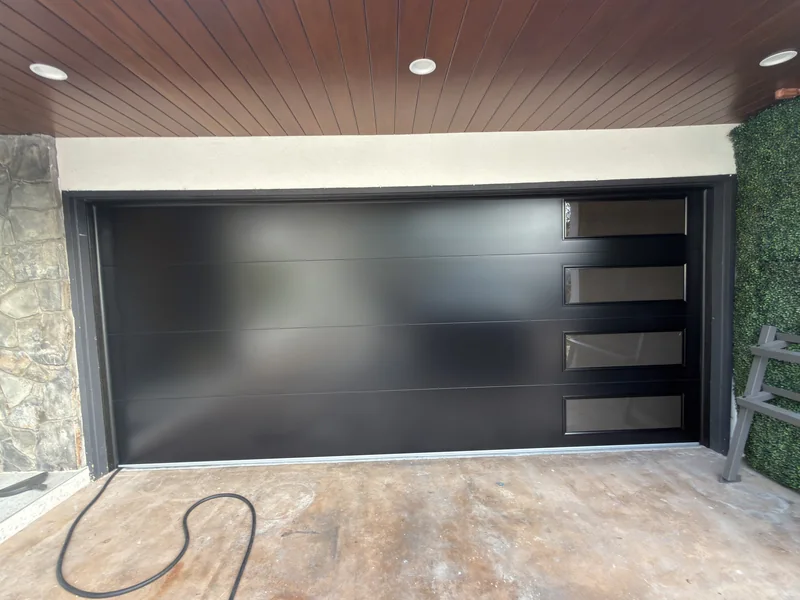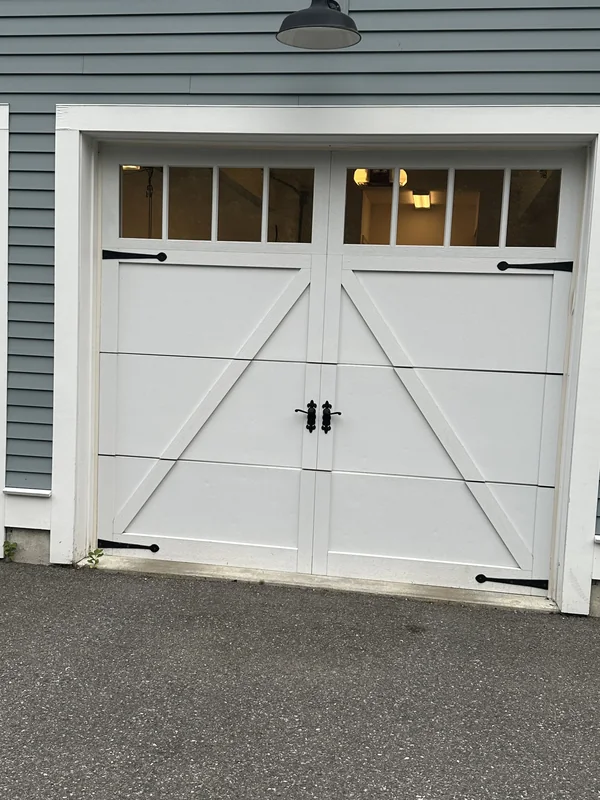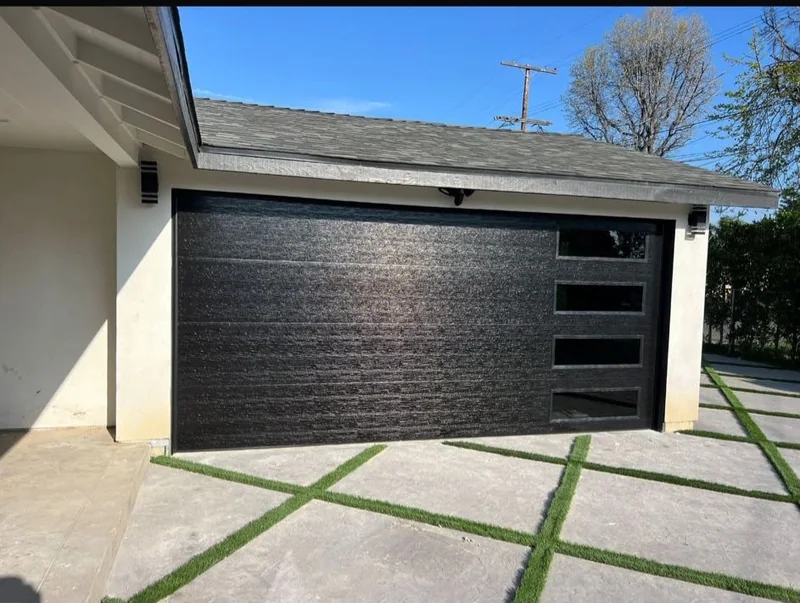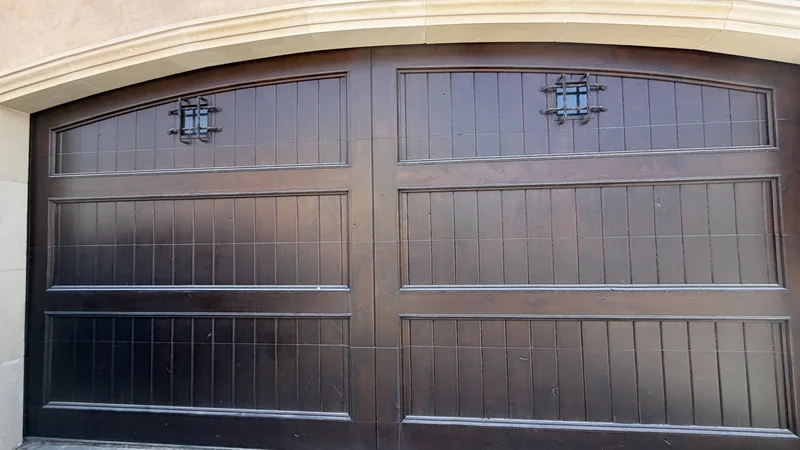
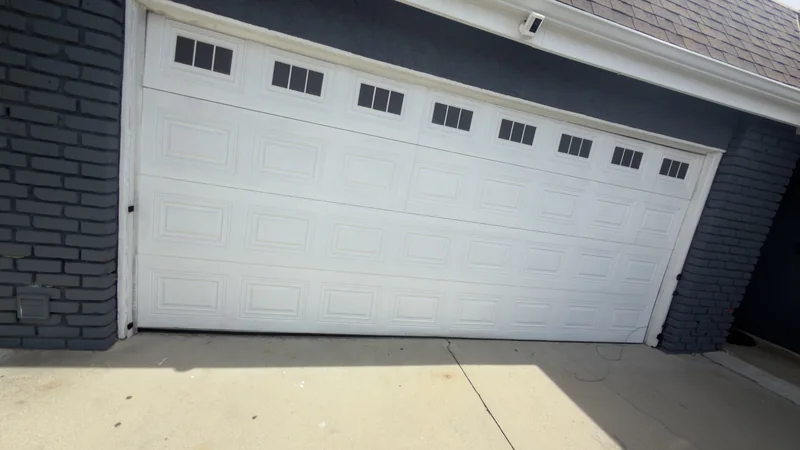
For a Northeast Ohio home, choose a garage door for the weather it will actually face: road salt and slush at the bottom edge, snow piled against the seal, and summer sun on the face. For most houses that points to an insulated steel door with a thicker skin or a foam core fused to its skins, a finish you can wash easily, and glass chosen for how you use the garage. Style comes after that, and wood makes sense mainly for owners ready to keep up with refinishing.
What does the weather here do to a garage door?
- Salt. Cars carry brine and slush inside, and it sits on the lowest panel, the bottom brackets and the seal. Amarr calls rock salt, ice melt and salt spray harsh on steel doors and their components.
- Snow and meltwater. Plowed and shoveled snow ends up against the bottom section, and freeze-thaw keeps the seal wet for weeks.
- Sun. A door facing south or west takes a lot of summer heat, which works on paint, stain and dark colors.
- Impact. Snow blowers, bikes, kids' balls and a bumper that misjudges the slush all land on the same lower panels.
Which material handles salt, snow and sun best?
| Material | Salt and slush | Snow and moisture | Sun | Upkeep |
|---|---|---|---|---|
| Steel | Fine if washed and scratches are touched up | Good | Good; very dark colors run hotter | Low |
| Wood | Finish takes the hit first | Needs a sound finish on every face | Finish fades and checks | High |
| Composite or fiberglass skin | Does not rust at the face | Good | Ask about fading | Low to moderate |
| Aluminum and glass | Frame finish matters | Good | Glass lets in heat and light | Moderate |
Clopay's FAQ says its wood doors need repainting or restaining on a short cycle, more often where moisture is high. In a salt-and-slush climate, that is a real commitment.
How much does steel gauge matter?
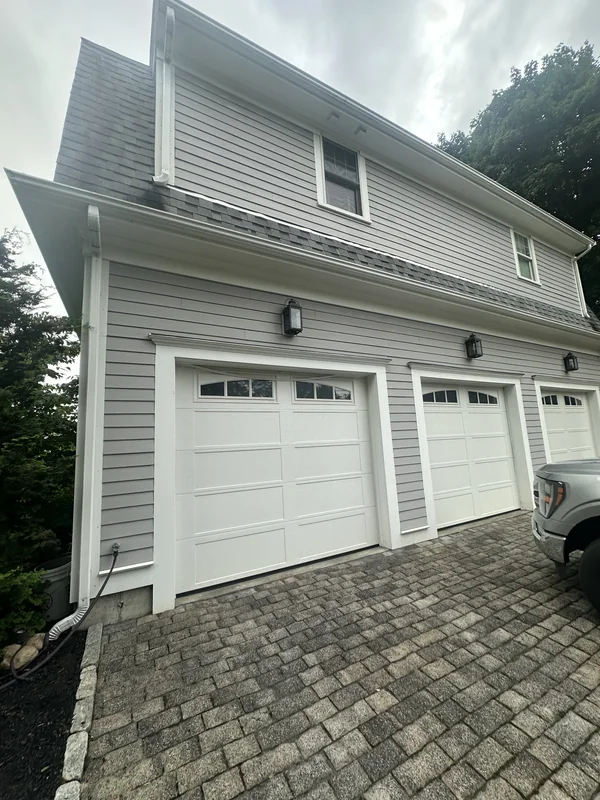
With steel, the gauge number runs backward: the lower the number, the thicker the metal. Clopay's FAQ uses the example that 24-gauge steel is thicker than 27-gauge. Thicker skins resist dents better.
Gauge is not the whole picture, though. How the door is built matters as much. When insulating foam is glued between two steel skins, Clopay notes that the panel gains rigidity. So compare complete doors, not only the skin number on the spec sheet.
What kind of finish should you look for?
A factory finish is the first line of defense against salt. What keeps it working is washing. Amarr's care guide suggests warm water with a household detergent when salt is present and warns against pressure washing. A mild day in late winter is a good time to rinse the bottom panel and brackets.
If you plan to repaint a steel door later, Clopay says to use a quality exterior latex paint and not an oil-based one. For a sunny face, ask the maker whether it has any guidance on dark colors for that model.
Are windows a good idea on a garage door here?
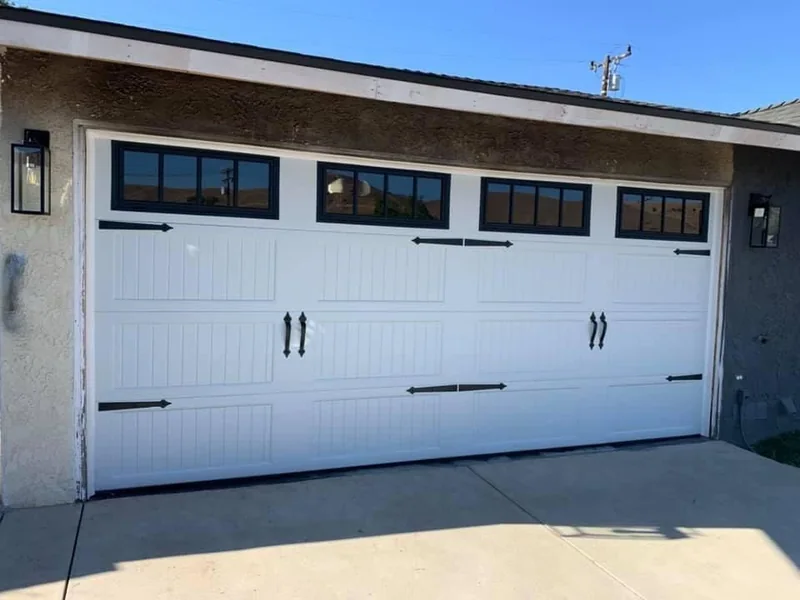
Windows bring daylight into the garage and change the look of the house. The trade-offs are privacy, some heat loss compared with an insulated panel, and one more thing to keep clean of salt film. Clopay lists tempered glass in single-strength or insulated versions, plus acrylic and aluminum panel options, and says window sections on its residential doors can go in the third or fourth section. If the garage is attached and heated, insulated glass keeps the windows from undoing what the foam does.
Does insulation belong in the decision?
For an attached garage, usually yes. It affects comfort in the rooms next to the garage, how quiet the door is and how stiff the panels are. The insulated door guide covers R-value and what it leaves out.
Anything Fairlawn-specific to check first?
Census estimates put the median year built for Fairlawn homes at 1973. On a house that age, the door, springs and opener may not all be the same age, so a new door is a good moment to look at the whole system. If the new door will change the look of the house noticeably, the City of Fairlawn's zoning office is the place to start, along with any homeowners association rules.
What should you ask before you order?
- What gauge are the front and back skins, and is the foam fixed to them?
- What insulation type is used, and how was the R-value determined?
- What finish comes on the door, and what cleaning does the maker recommend?
- What glass type is in the windows, if any?
- Will the springs be sized to this door's weight, and does the current opener suit it?
Ready to talk through a new door?
Your next step: phone (330) 947-4591, or fill in the request form, with the width and height of the opening, whether the garage is attached, the direction the door faces, and a photo from the street. From there, our new door installation team can go over materials and styles that suit the house. If the current door only has a damaged section, panel replacement may be worth asking about first.