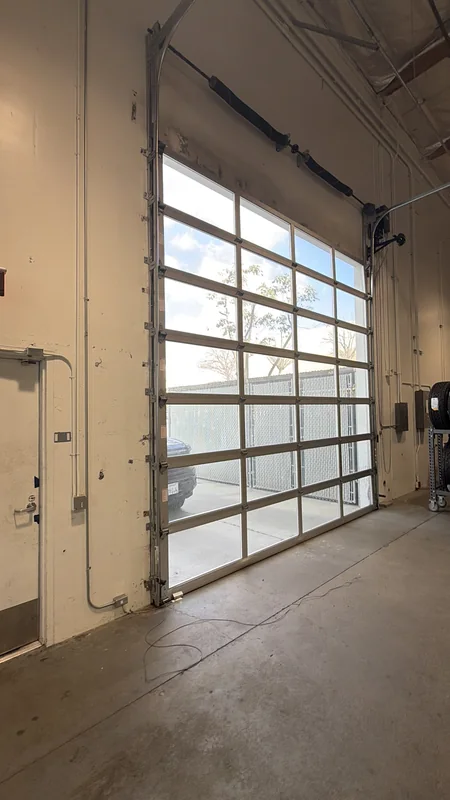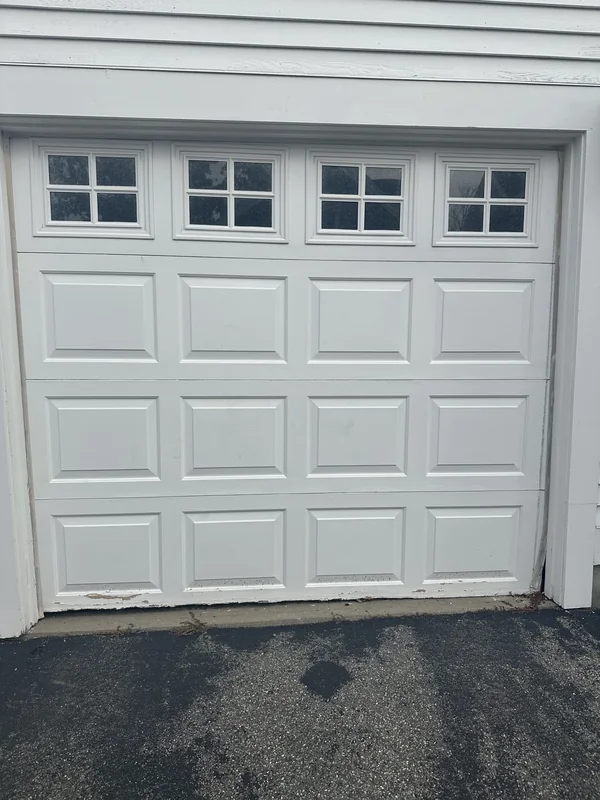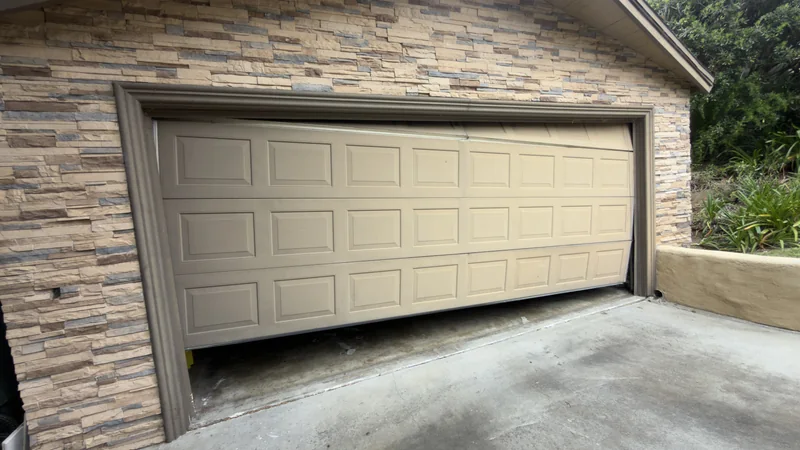
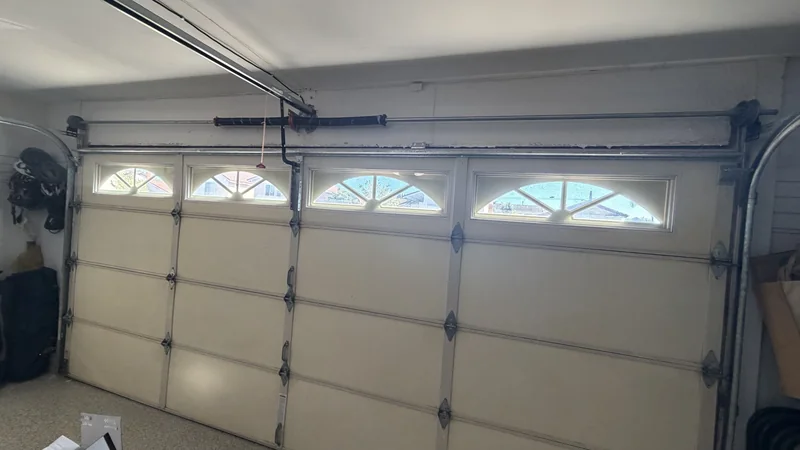
Hinges do more than join the panels
Each hinge lets two door sections bend through the curved track. Side hinges also position the roller stems at the correct distance from the door. A hinge with a cracked leaf, stretched screw hole, or bent barrel can let a panel shift and make the roller rub the track.
Signs of hinge trouble
- A pop each time one section enters the curve
- Black dust or metal shavings around a hinge barrel
- A visible crack, bent leaf, or missing fastener
- Panel edges that no longer line up while the door moves
- A roller stem that leans instead of staying square
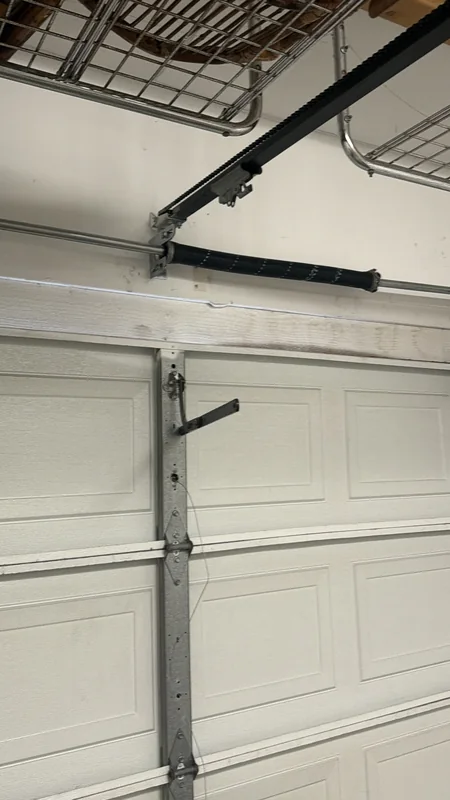
Matching the replacement matters
Garage door hinges are numbered by position and vary in width, thickness, and roller offset. We identify the location, inspect the attachment points, and match the replacement rather than installing a one-size part. The surrounding panel is checked for torn metal or enlarged holes before the hinge is secured.
Testing after the repair
We inspect the roller, track spacing, and nearby hinges, then move the door slowly through the curved track. The opener is reconnected only after the sections fold cleanly and the roller stays centered.
Do not remove a bottom fixture or any bracket connected to a lift cable. Those parts can carry spring tension.
Call (330) 947-4591 with a photo of the damaged hinge and the full door section around it.