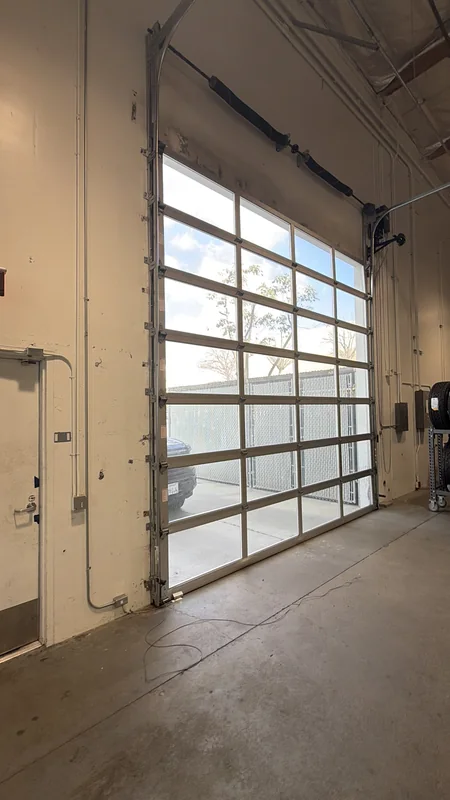
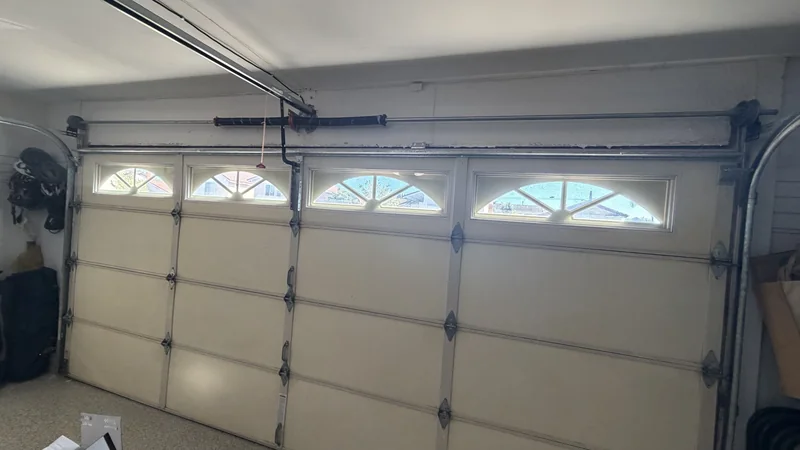
Before booking anything, press the wall button once and watch closely. What the opener does, and what it fails to do, tells you (and us) most of the story.
Match the symptom to the likely cause
| What you see or hear | Where we would look first |
|---|---|
| Motor sounds normal, door stays put | The drive gear inside the motor head, or a trolley that has slipped off its chain or belt |
| Door closes most of the way, then heads back up | Photo-eye alignment, dirty lenses, or a close-force limit set too low for a stiff door |
| No sound and no light on the unit | The outlet, a tripped GFCI, or the breaker |
| Wall button works, remotes do not | Remote battery, the lock setting on the wall control, or the receiver |
| Grinding or rattling along the rail | A loose chain, a worn sprocket, or rail mounts that have shifted |
| Door stops short of the floor or the top | Travel limits that have drifted out of adjustment |
Checks you can do in a few minutes
- Plug a lamp into the outlet the opener uses. If the lamp stays dark, reset the GFCI outlet (it may be on a different wall or in a bathroom) or check the breaker.
- Look for a lock or vacation setting on the wall control and switch it off.
- Find the two small sensors a few inches off the floor on each side of the door. Wipe the lenses with a soft cloth. Each one should show a steady light. A blinking or dark light means they can't see each other, and a gentle nudge on the bracket often brings them back in line.
- Put a fresh battery in the remote.
Only pull the red emergency release when the door is all the way down. If the door feels heavy as you lift it, lower it and stop: the springs aren't carrying their share, and that is not something to fix yourself.
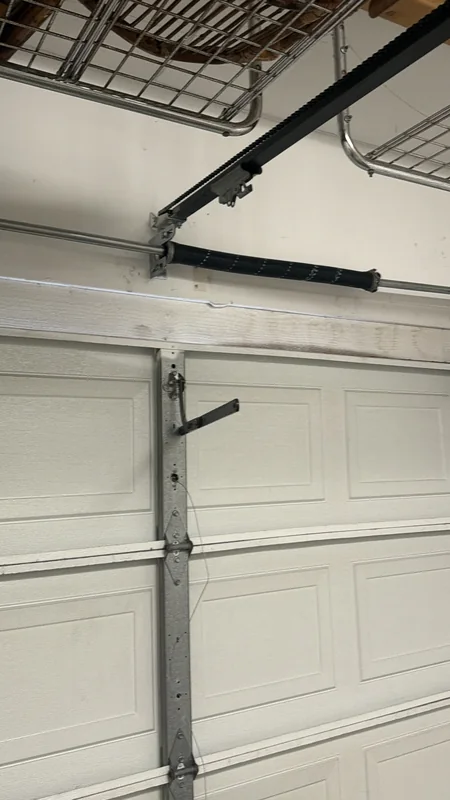
Cold mornings and a door that bounces back
Winter brings one opener complaint in particular. In January, the normal overnight low at Akron-Canton Airport is about 20°F (NOAA monthly normals). At that temperature, grease in the rollers, hinges and the opener's own gear train thickens. The door needs more push to move, and many openers read that extra resistance as something in the way. The door starts down and bounces right back up.
Cranking the force setting up is the wrong fix, because it also dulls the safety reverse. The better approach is finding why the door got stiff: dry or worn rollers, a spring that has lost some lift, or a bottom seal frozen to the slab. Our guide to a frozen garage door on a winter morning covers the ice side of it.
Repair it, or put in a new unit?
One failed part on an otherwise solid opener is usually worth fixing: a gear, a sensor, a limit setting, a remote. A new unit starts to make more sense when:
- The opener has no photo-eye sensors at all
- Parts for that model are hard to come by
- Two major parts have failed at the same time
- You want something it lacks, such as a battery backup for power outages
More on that last point in our guide to opener battery backup during a power outage.
How we work through an opener call
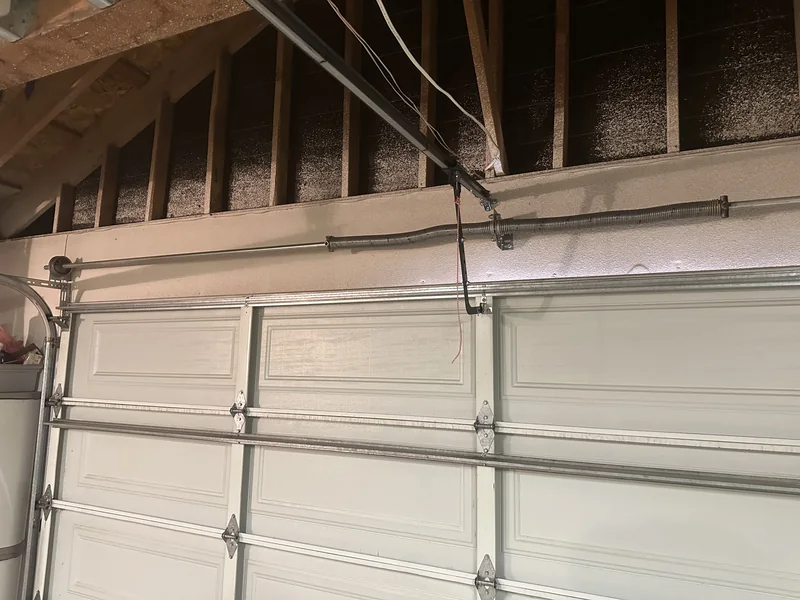
The door gets tested first, by hand, with the opener disconnected. Openers steer the door; springs do the lifting. A heavy or unbalanced door wears out any opener, new or old, so that gets sorted before anything else.
Then the opener itself: power, the wiring to the wall control and sensors, limits, force, the gear and the logic board. You hear the options and their prices before we start. The visit closes with full open-and-close cycles and a reverse test with an object in the door's path.
Next step
Ring (330) 947-4591, or fill out the request form on this page. Have the opener's brand and model handy (the label is usually on the back or side of the motor head), along with a quick description of what happens when you press the button. A short phone video of one cycle is even better.