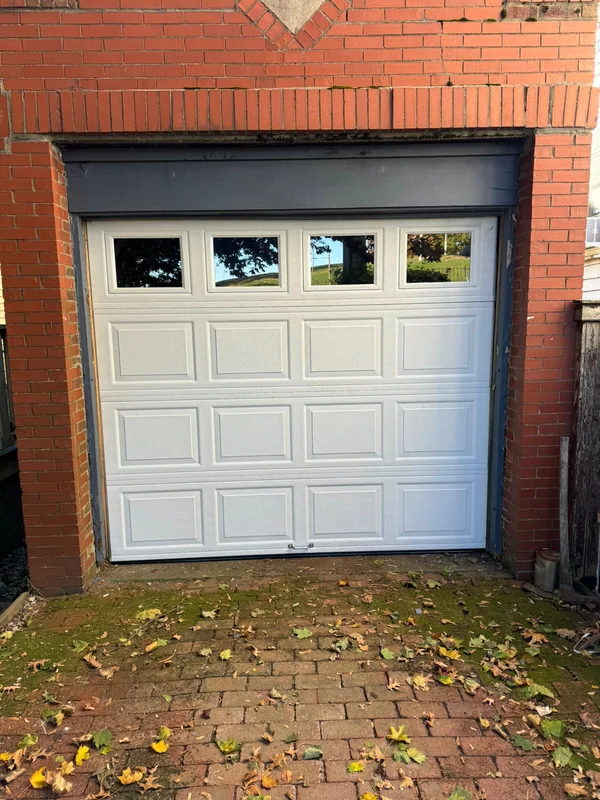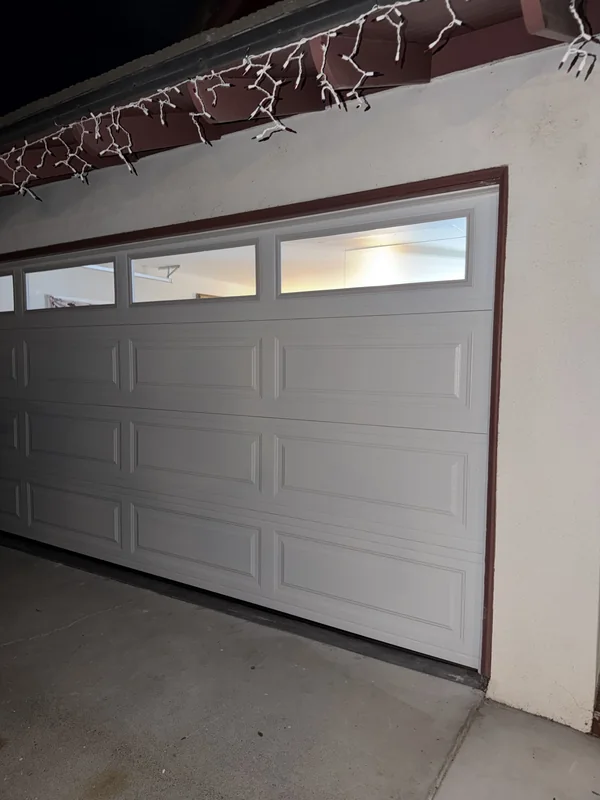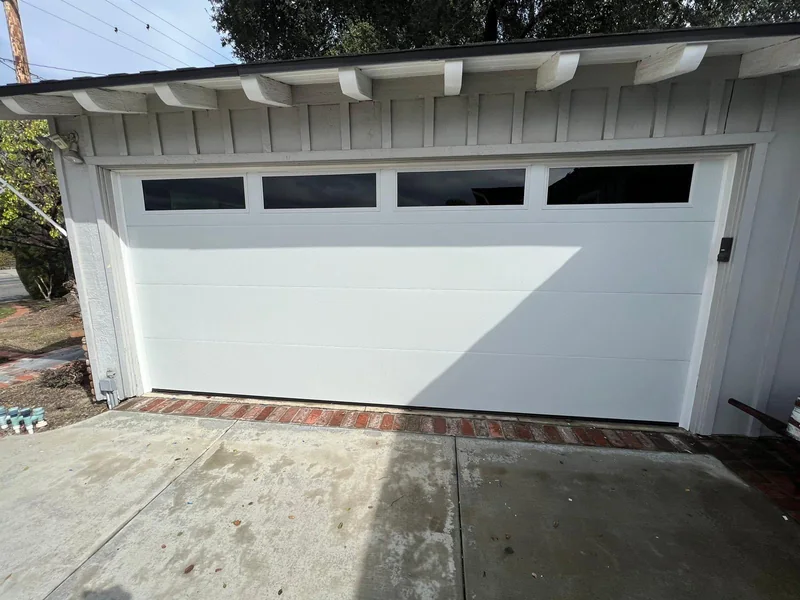
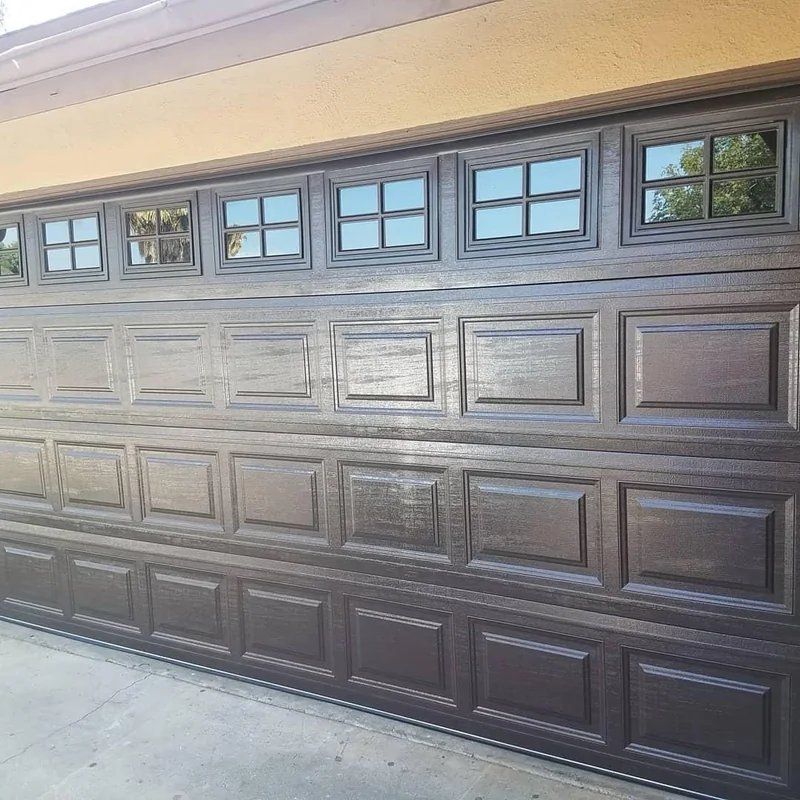
The causes are usually ordinary. A trailer hitch backs up a little too far. A car slides forward on an icy driveway apron. A recycling bin gets blown into the door during a windstorm. Afterward, the question is always the same: replace one section, or the whole door?
Sizing up the damage
Walk the door inside and out and sort what you find:
- Cosmetic: a shallow dimple on a flat area, scuffed paint, a small dent that didn't fold the metal
- Structural: a sharp crease, especially one across a rib; a section that flexes as the door moves; torn metal where a hinge or roller bracket mounts
- Corrosion: blistered paint and rust along the bottom edge, or rust coming through on the inside face
- Material failure: splits, soft spots or rot in a wood section; cracks in a composite skin
Cosmetic damage can often be left alone. Structural damage is worth replacing, because each section carries load every time it bends around the curve of the track, and a weakened one pulls its neighbors out of line.
Find the door's label before you call
A match depends on knowing exactly what you have. Look for a sticker on the inside of the door, often on an end stile (the vertical strip at each end of a section) or along a top or bottom edge. Photograph it, along with:
- The whole door from the driveway
- The damaged section up close, outside and inside
- The edge of a section, which shows whether the door is insulated
No label? Measurements and photos still help. Some doors can be matched by design and size alone.
Why matching is the hard part
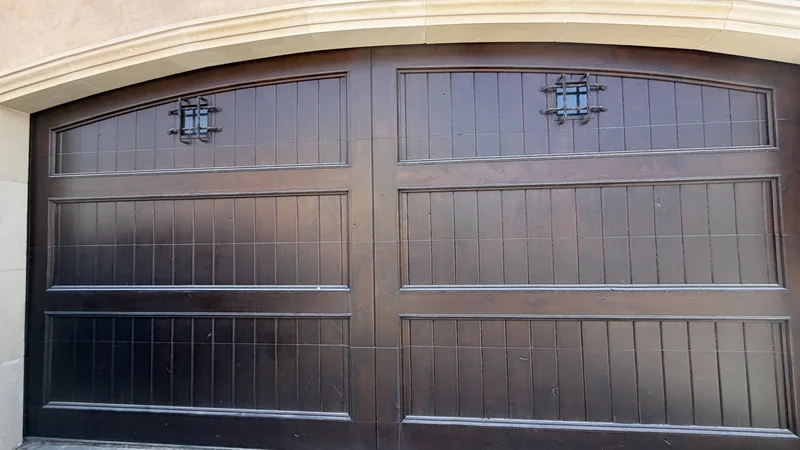
A replacement section has to agree with the rest of the door on height, width, thickness, embossed pattern, window layout and color. Manufacturers retire designs, and a door that has faced afternoon sun for years may have drifted from its factory color. We check with the manufacturer or supplier and tell you what a match will realistically look like before anything is ordered. If the design has been discontinued, you hear that up front.
Insulated doors add one more requirement. The new section needs the same thickness and core as the others, or it won't line up at the hinges and the door won't seal evenly against the floor and jambs.
The bottom section in a salt-road winter
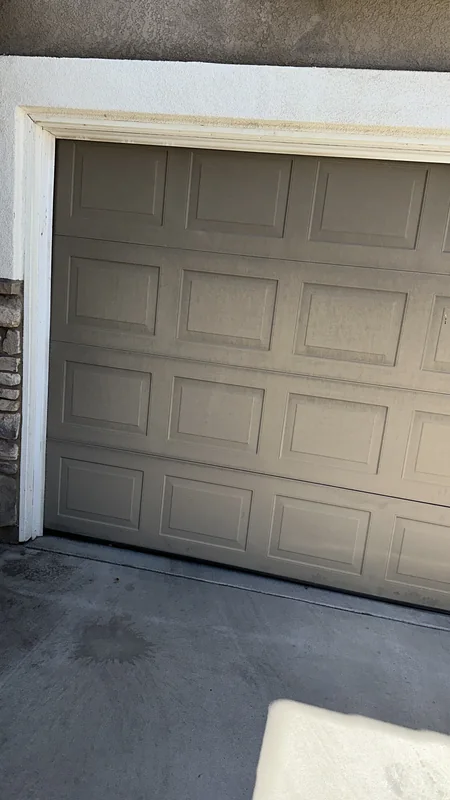
The lowest section lives closest to the slab, where snowmelt from cars pools against the seal. Once the paint chips along that edge, salty water starts rust that spreads up and inward. It is common to find a bottom section that looks tired from the driveway and worse from inside. Replacing just that section can be a good fix, as long as the ones above it are sound. A yearly tune-up catches that edge before it gets that far.
What the swap involves
This isn't a bolt-on job. The bottom section carries the bottom brackets, where the lift cables attach, so replacing it means taking spring tension off first. For an upper section, the door is secured and the hinges and rollers are moved to the new section, or swapped for new ones if worn. Afterward the door is rebalanced, since a new section rarely weighs exactly what the old one did, and the opener's limits and reverse are checked.
Hammering out a crease or removing a section on your own is a bad idea. The hinges and brackets on a sectional door are part of a system held under spring tension.
When a new door is the better spend
Two or more damaged sections, rust on several panels, a discontinued design, or a wish for more insulation all tip the math toward a new door. Our guide to choosing a garage door in Northeast Ohio helps with that call.
What to do next
Call (330) 947-4591 or send the request form on this page, with your photos and the label details. If the door still runs smoothly, it is usually fine to keep using it until the section is replaced. If it scrapes, binds or rides crooked, stop and unplug the opener.