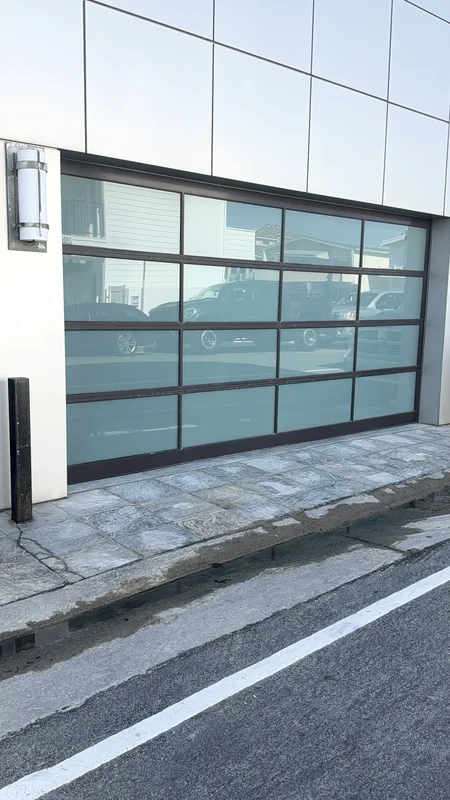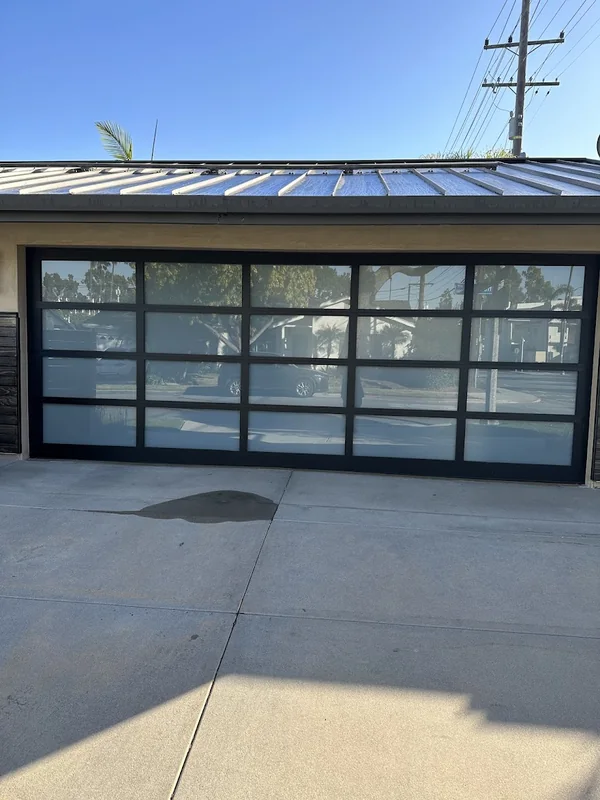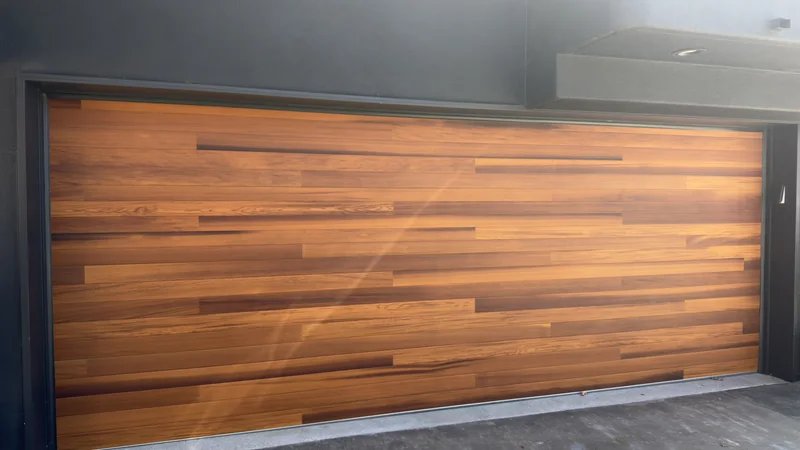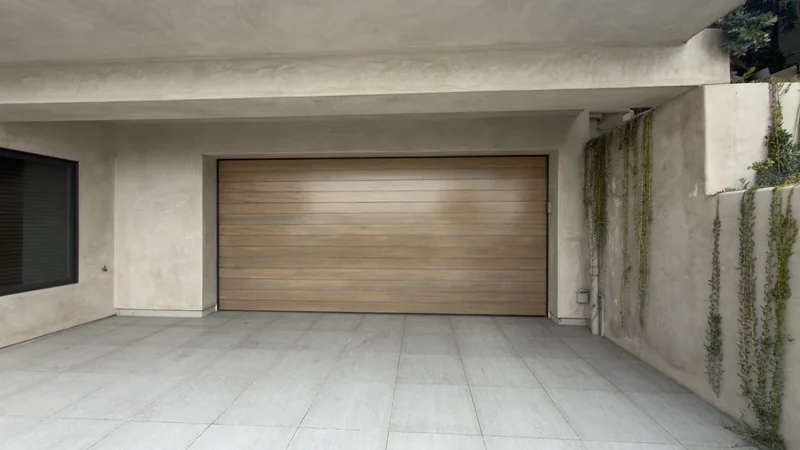
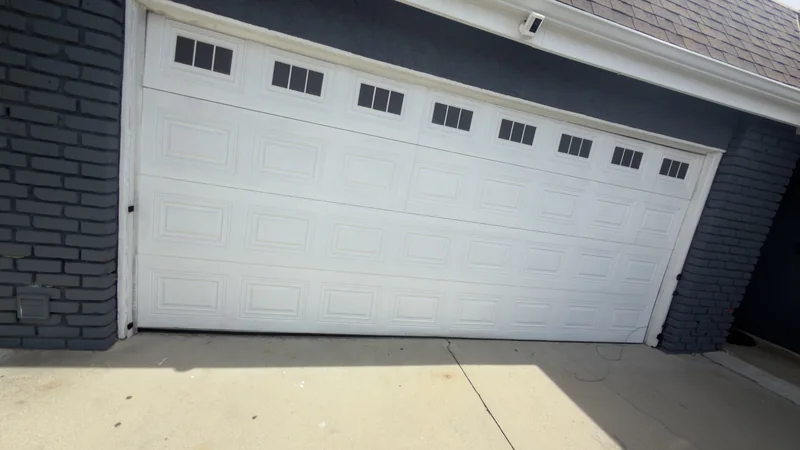
Fairlawn's houses are younger than Akron's on average. Census figures put the median year built at 1973 in Fairlawn, against 1954 in Akron (Fairlawn and Akron, ACS 2020-2024). A home from that era has been through more than fifty Ohio winters, and the garage door has done its share of the work.
Six questions to settle before you pick a door
- Is the garage attached? If a bedroom or family room shares a wall with it or sits above it, insulation matters a lot more.
- How do you use the space? Parking only, or also a workshop, a home gym, or storage for things that shouldn't freeze?
- How much headroom is there? The space between the top of the opening and the ceiling decides which track and spring setup will fit.
- Is the floor level across the opening? A sloped or heaved slab changes which bottom seal will close the gap.
- Does an HOA have a say? Some neighborhoods set rules on style and color.
- Keep the opener or replace it? A heavier insulated door may be more than an older opener was set up for.
Insulation and an Ohio January
An uninsulated door is a single layer of steel. In a month when the normal low at Akron-Canton Airport sits around 20°F (NOAA monthly normals), that layer does little to hold the cold out of an attached garage. Insulated doors sandwich a foam core between steel skins, which also stiffens the door and tends to quiet it. Our guide to insulated garage doors for Ohio winters compares the options.
Seals matter as much as the core. The bottom seal, the weatherstrip along the jambs and header, and the joints between sections are where drafts and blowing snow find their way in.
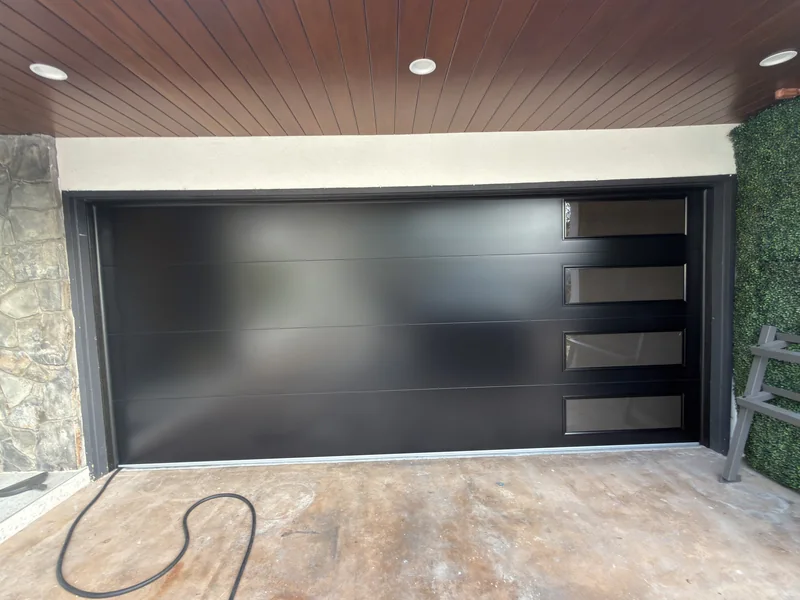
Check with the city or township first
For exterior changes in Fairlawn, the city's Zoning page is the right place to start. In Copley Township, the residential permitting page covers attached and detached garages. A same-size door in the same opening is a different job from widening the opening or changing the header, and anything structural should be confirmed with the local building department before a door is ordered. Check HOA rules at the same time.
From first visit to final test
- Measuring. We measure the opening, headroom and side room, and look over the framing, the jambs and the slab.
- Choosing. We go through materials, insulation, windows and color, and you get the full price before anything is ordered.
- Removal. The old door comes down after its spring tension is safely released, one of the riskiest steps in the whole job.
- Installation. Sections, hinges, rollers, track, springs and cables go in, with the springs sized to the new door's weight.
- Sealing. The bottom seal is fitted to your floor, and the perimeter weatherstrip is set snug against the new door.
- Opener and safety. The opener is reconnected or replaced, limits and force are set, the photo-eyes are aligned and the reverse is tested. We also show you where the emergency release is and when it's safe to use.
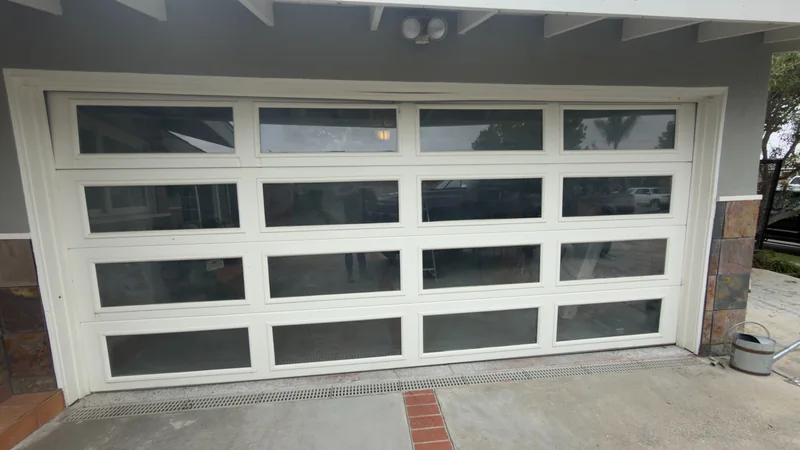
Signs the current door has run its course
- Several sections are creased, cracked or rusted through along the bottom
- The repair calls keep coming, each one buying less time than the last
- Wood sections stay soft or split no matter how often they are painted
- The manufacturer has stopped making parts for it
- The garage stays bitterly cold all winter behind a bare steel skin
Repair might still win
A broken spring, a snapped cable or one bad section doesn't mean the door is finished. If a section replacement or a straightforward repair is the better value, we will tell you so.
Getting started
Phone (330) 947-4591 or send the form here with the details. Include a photo of the door from the street, the rough width and height of the opening, and a note on what matters most to you: warmth, looks, noise or cost. Our guide to choosing a garage door in Northeast Ohio is worth reading before the visit.