Start with what not to do
Keep your hands off the springs, the winding cones, the lift cables and the bottom brackets. With one spring snapped, the rest of the system can still be holding a dangerous amount of wound-up force. Tools slip, set screws let go, and people end up in the emergency room. This repair takes proper winding bars, clamps and training.
While you wait, these steps are safe:
- Put the remote down. An opener dragging a door with no spring help can strip its gear or kink the top section.
- If the door is shut, leave it shut. Raising it by hand means holding its full weight, and it can come down fast.
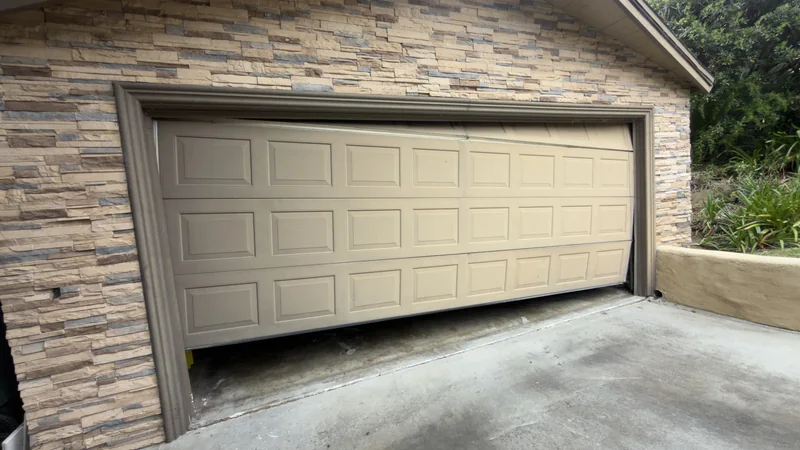
- If it stalled partway, keep people, pets and the car out from under it.
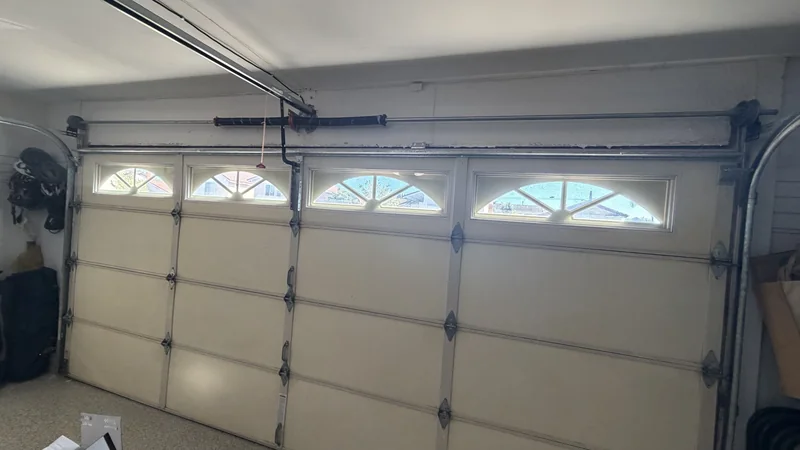
- From the floor, snap a photo of the spring area above the door. It helps us plan parts.
Is it really the spring?
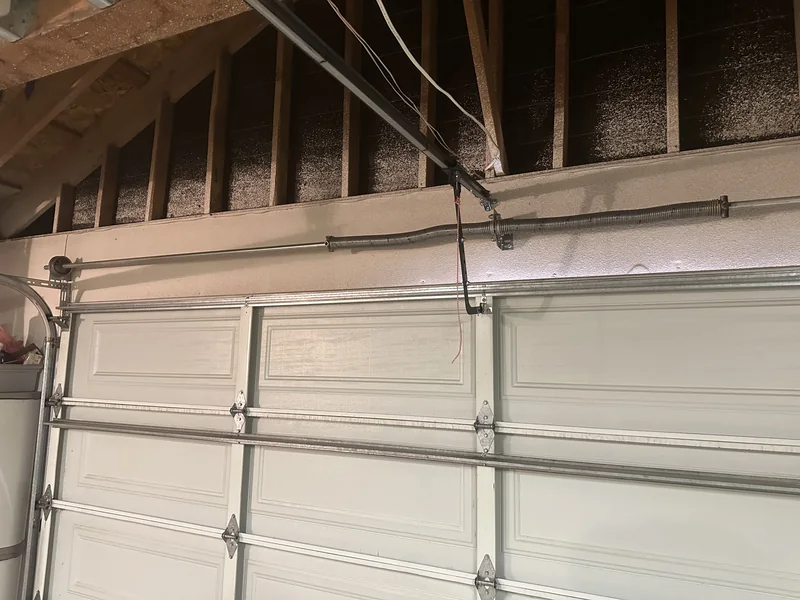
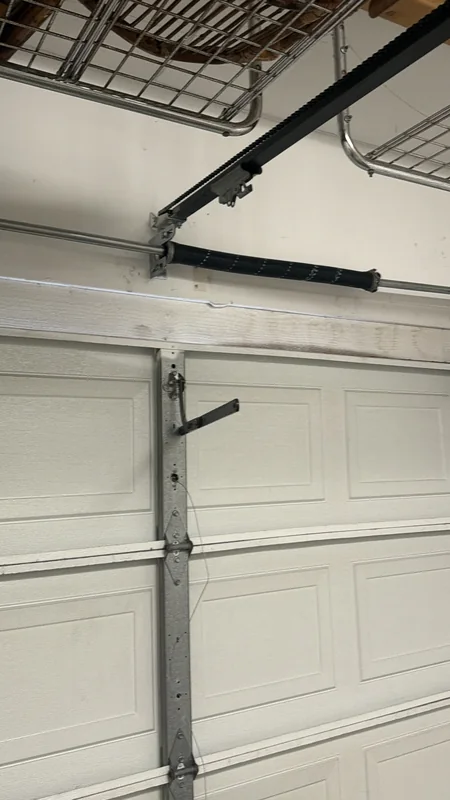
Turn on the garage light and look at the wall just above the closed door. Many garages use torsion springs: one or two tight coils wrapped around a steel tube that spans the opening. A broken one shows a clean separation somewhere along its length, and the two halves may have spun apart on the tube.
Some garages have extension springs instead. Those stretch from front to back above the horizontal tracks, one per side. When one fails, you may find a sagging coil hanging from its pulley or pieces lying on the floor.
Other hints point the same way: a door that lifts a few inches and quits, an opener that sounds like it is straining, cables drooping loose beside the tracks. If you can't tell what you're looking at, describe it on the phone; the technician confirms it at the door.
Why a spring picks a cold morning
A torsion spring is wound tightest when the door is closed. That is when the steel carries its peak stress, so plenty of breaks happen overnight and get found on the way to work.
Cold stacks the odds further. The NOAA station at Akron-Canton Airport, the long-running weather record for this part of Summit County, logs roughly 120 nights each year that dip to freezing or lower (NOAA 1991-2020 normals). Steel near the end of its fatigue life has less margin on those nights, and the opener is also pushing against grease that has gone thick. That is why a worn spring so often seems to quit on a frosty morning.
What a spring visit covers
- A look at the whole lift system. A snapped spring can damage other parts on its way out. Both cables, both drums, the center bearing plate and the top section get checked before you hear a price.
- Sizing the replacement. The right spring depends on the weight and height of your door: wire gauge, inside diameter and length. A guess leaves a door that creeps down on its own or jumps up.
- Options and price. You hear what each option costs before any work begins.
- Install and tension. The new spring goes on and is wound to suit your door, with the cables seated evenly on the drums.
- Balance and safety. We raise the door by hand to about waist height and let go. It should stay there. Then the opener is reconnected and its reverse is tested against an object on the floor.
Replace one spring, or the pair?
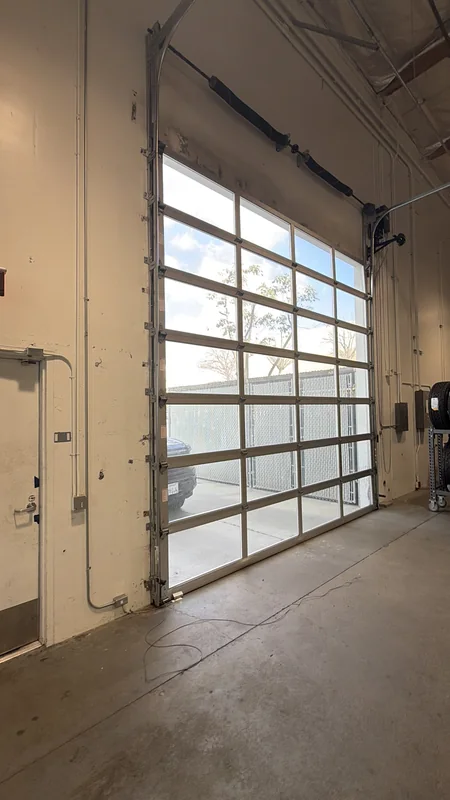
On a two-spring door, both springs may have gone in together and lifted the door the same number of times. If so, the survivor often follows before long; if one was replaced more recently, that changes the picture. Changing both keeps the lift even from left to right and can save a second call. Changing only the broken one costs less today. We lay out both, and you choose.
Extension spring doors get the same conversation, plus a check of the safety cables that should run through the middle of each spring to catch it if it snaps.
What to do next
Call (330) 947-4591 at any hour, or fill in the request form on this page. It speeds things up if you can tell us:
- What happened: a bang, a door that stopped, a door that won't start
- Where the door is now: closed, open, or stuck partway
- A floor-level photo of the springs
- Whether a car is stuck inside and needed soon