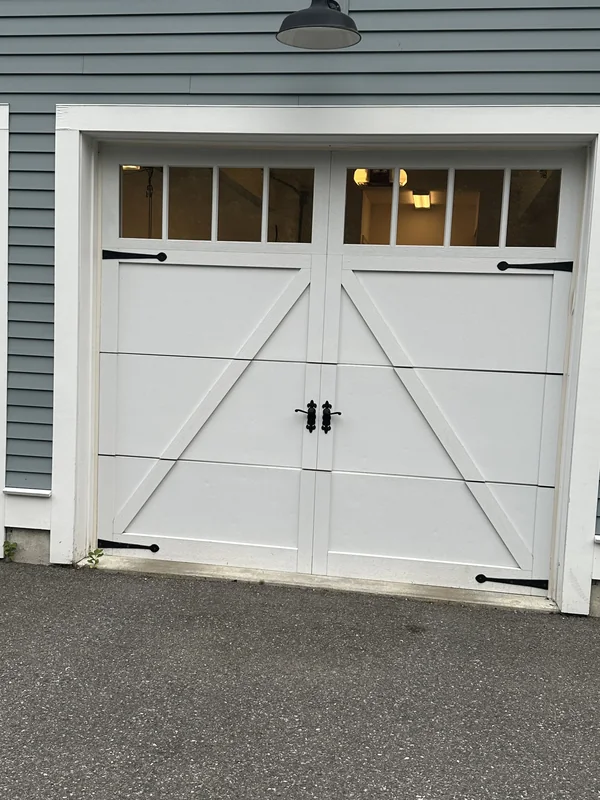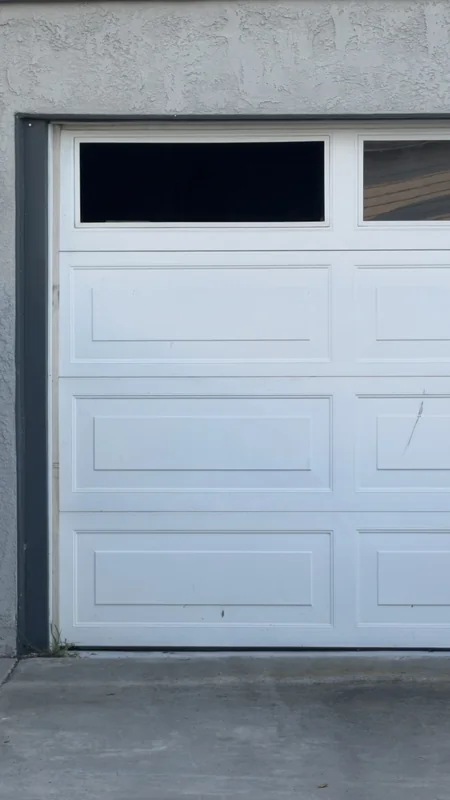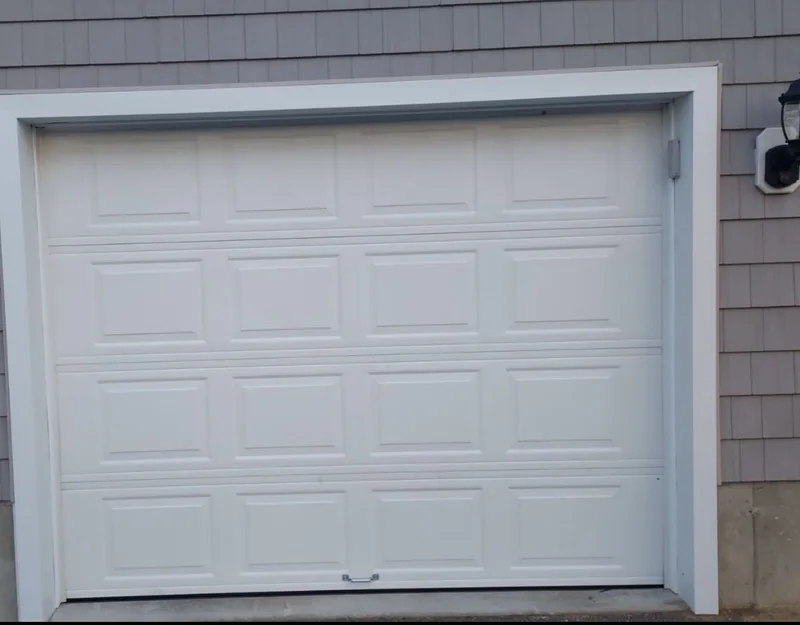
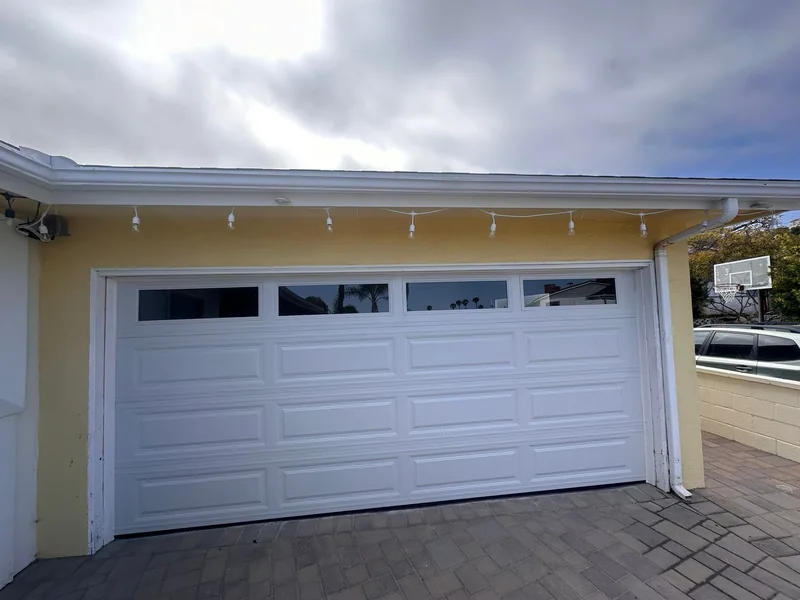
If your garage door seems frozen to the ground, stop pressing the button, keep everyone clear, and look over the springs and cables from a safe distance before anything else. If they look intact, treat it as an ice problem rather than a strength contest: free the ice gently along the bottom seal, dry the floor, and call for help if the door still won't lift or anything above it looks wrong. Forcing it is how a frozen seal becomes a torn seal, a bent top section or a worn-out opener gear.
Why does a garage door freeze to the floor overnight?
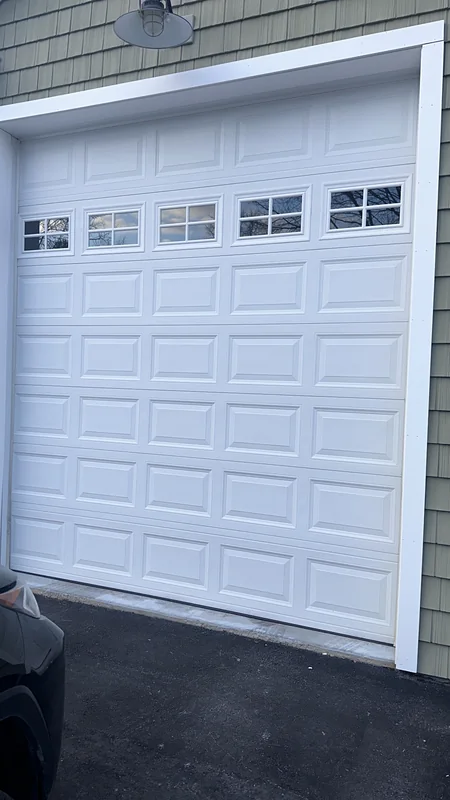
Along the bottom edge of the door sits a flexible rubber seal that presses into the concrete to block drafts. Anything wet that reaches that line can lock it down once the temperature falls. Clopay describes the cause simply: the bottom weatherseal sits in water or wet snow, and that water freezes.
The water usually comes from one of three places:
- Your own car. Snow packed in the wheel wells melts in the garage, and the puddle creeps toward the lowest point, which is often the door line.
- The driveway. Afternoon melt runs downhill. If the apron slopes toward the house, that meltwater ends up under the seal.
- A tired seal. A flattened or split seal forms little pockets that hold water instead of shedding it.
The local weather keeps this cycle going. NOAA's 1991-2020 normals for the Akron-Canton Airport station list 120.3 nights in an average year when the low reaches 32°F or colder. March is the sneaky month: it still averages 20.3 freezing nights, yet the normal daytime high climbs to 48.4°F. Snow melts in the afternoon and locks the door down again before sunrise. Fairlawn driveways live with that same pattern from late fall into spring.
What should you do in the first five minutes?
- Stop using the opener. If you already pressed the button once and the motor strained, the door rose an inch and dropped back, or nothing moved, don't press it again. Every repeat loads the drive gear and tugs on the top panel where the opener arm connects, while the ice holds the bottom. Genie's safety guidance is not to operate a door that is jammed or has a broken spring.
- Look up before you look down. From a step back, check the springs over the door and the cables at the bottom corners. A visible gap in a coiled spring, a cable hanging slack, a crooked door or rollers out of the track means this morning is about more than ice. Leave the door down, don't try it again, and call.
- Find where it is stuck. A flashlight along the inside bottom edge usually shows which stretch of rubber is frozen fast. Often one end has already let go.
- Work on the ice, not the door. Clopay's advice is to chip gently at the ice or melt it with warm water, then clean and dry the area so it does not refreeze. Use a plastic scraper, keep the edge off the rubber, and mop up the water right away.
- Try once, only if everything looks normal. When the springs and cables look intact and the seal looks loose along its full width, run the opener one time. If it still stalls or reverses, stop there. If you can't dry the area or the ice won't let go, leave it for a technician rather than adding more water.
What should you skip, even when you're late?
- Prying. A shovel blade or crowbar under the door rips the seal out of its retainer and can dent the bottom section.
- Lifting harder by hand. Pulling the emergency release does not help with ice. It disconnects the opener, but the seal stays frozen down, and muscling the door up tears the rubber just as the motor would.
- Turning up the opener's force. That adjustment also decides how hard the door presses on a child, a pet or a bumper on the way down.
- Ice melt on the door. Clopay warns against using it on the door, especially a metal one, because it can damage the surface.
- Boiling water, open flame or a torch. Extreme heat can warp the seal and scorch the finish, and a big splash of water just builds a thicker ice sheet.
- Neighborhood tricks. Clopay specifically suggests checking with a dealer before trying home remedies, since door materials react differently.
How do you get going if the door still won't budge?
Leave it closed. If there is no immediate danger and another exit is available, keep clear and leave the door unused while you arrange help, use another exit or borrow a ride. Ask everyone in the house to leave the remotes and keypad alone so nobody keeps cycling a door that can't move.
If you see a spring gap, a slack cable, a crooked door, or rollers out of the track, that is service work. Our emergency repair line is answered 24/7.
How do you keep it from freezing down again tonight?
- Dry the landing strip. Once the door opens, wipe or sweep out the water where the seal meets the floor before evening.
- Knock snow off outside. Clearing the wheel wells before pulling in means less meltwater drifting toward the door.
- Look at the seal in daylight. Cracks, flat spots and gaps at the corners all hold water. A seal replacement is a routine part of a maintenance visit when it is worn.
- Check the slab. If water always pools at the same low spot, no seal will cure a floor that slopes the wrong way. Point it out when a technician is there.
If your garage is attached and cold air around the door edges is part of the problem, the guide to insulated doors in an Ohio winter explains what a better door can and cannot change.
Still frozen down? Here is what to do next
Call (330) 947-4591, day or night, and tell us exactly what happened when you pressed the button: a hum, a short lift and drop, or silence. Photos from the ground of the bottom edge and the springs help, and so does the brand name printed on the opener motor. If the door is closed and nothing looks broken, it is fine to leave it that way until help arrives.