A garage door calendar for Northeast Ohio
Doors here work through two very different seasons, and each one is hard on different parts. It helps to think about upkeep by month instead of by part.
October and November: the best window for a tune-up
Freezing nights climb quickly at the end of fall. The Akron-Canton Airport station averages about 14 nights at or below freezing in November and about 24 in December (NOAA monthly normals). Fresh lubricant, checked springs and a sound bottom seal before that stretch mean fewer surprises on cold mornings.
December through February: watch and listen
This is when stiff grease and ice at the threshold show up. Push slush away from the door before it refreezes, and don't keep running the opener against a door that is frozen to the floor. The frozen door guide explains what to do instead.
January and February are also the snowiest months, averaging roughly 13 and 12 inches at the Akron-Canton station. After a heavy snow, clear the threshold and brush snow away from the photo-eyes near the floor, since a blocked sensor keeps the door from closing.
March and April: the thaw check
Spring freeze-thaw keeps working on the floor and the lower track brackets. Once the salt season ends, rinse the floor near the door and look at the bottom brackets and the lower ends of the cables for rust. Look, but don't touch those parts.
Summer: seals and sensors
Heat and sun dry out rubber. It is a good time to check the bottom seal for cracks and to wipe the photo-eye lenses clean.
What the visit checks
- Safety reverse and photo-eyes. The door should stop and reverse on contact with an object, and whenever the sensor beam is broken.
- Balance. With the opener disconnected, the door should hold near halfway on its own. A door that drifts down means the springs have lost strength.
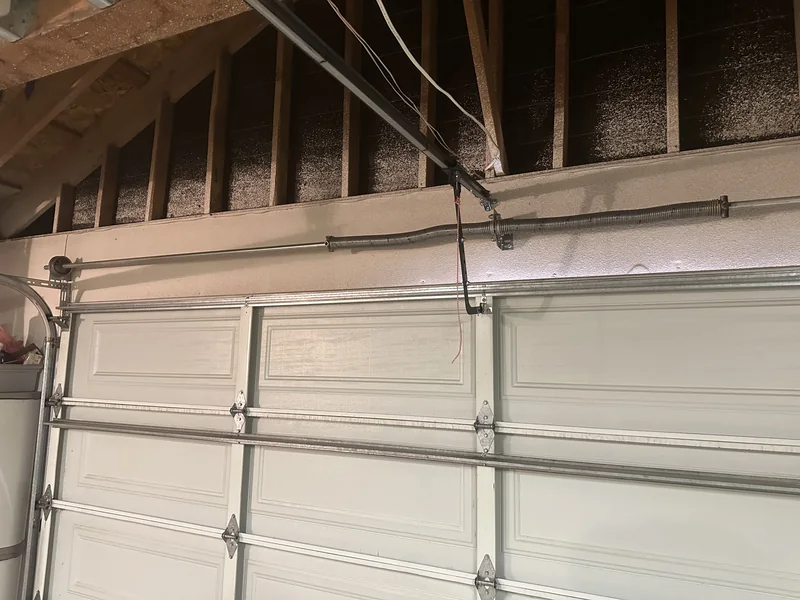
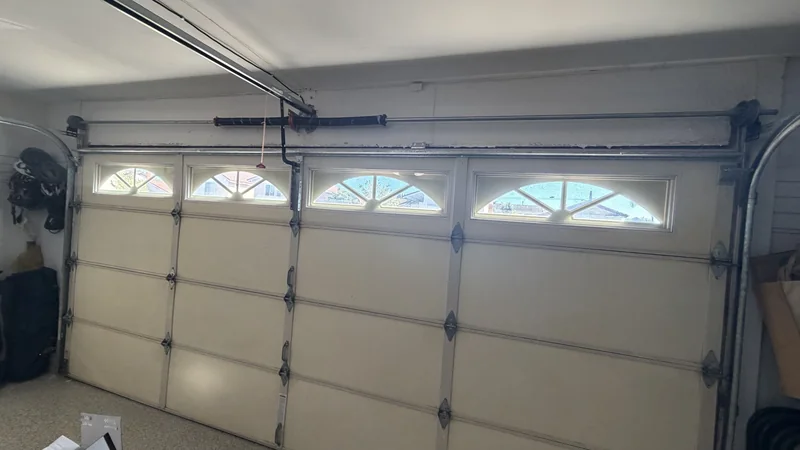
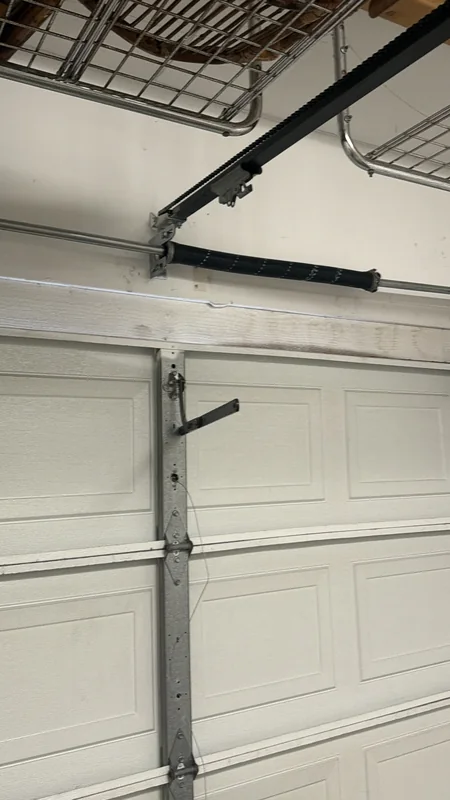
- Springs, cables and drums. A close look for gaps, stretched coils, fraying, rust and uneven wraps.
- Bottom brackets. Rust from salty meltwater tends to show up here first.
- Rollers and hinges. Worn wheels, wobbly stems, cracked hinge leaves and loose fasteners.
- Tracks. Alignment, secure brackets and clearance through the full travel.
- Lubrication. Moving metal parts get a lubricant meant for garage doors. The inside of the track stays dry.
- Seals. How the bottom seal meets the floor, and the weatherstrip along the sides and top.
- Opener. Limits, force, rail fasteners and the chain or belt.
If something is close to failing, you hear about it along with a price, and it's your decision whether to fix it then or later.
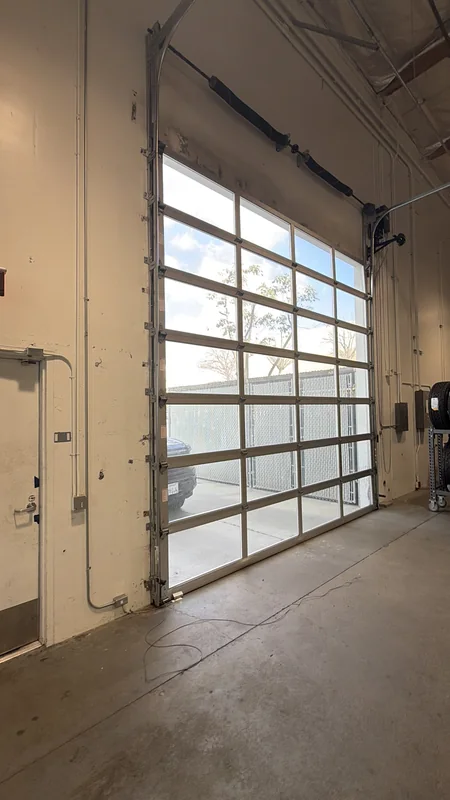
A five-minute monthly habit
- Run the door through one full cycle and listen. New squeaks, pops or grinding are early signs. Our guide to garage door noises helps decode them.
- Watch it move. It should travel evenly, without jerks or pauses.
- Test the reverse: set a roll of paper towels on the floor in the door's path and close the door. It should reverse on contact. If it keeps going, leave the opener off until someone checks it.
- With the door closed, look for daylight along the floor.
Springs, cables and bottom brackets are off limits. They sit under constant high tension, and adjusting or loosening them is how people get badly hurt. That part of the job belongs to a technician.
When a tune-up isn't enough
Some findings call for a repair visit instead: a gap in a spring, a frayed cable, a roller outside its track, or a door that fails the reverse test. Stop using the opener and call. The garage door safety checklist helps you tell the difference.
Booking a tune-up
To book, call (330) 947-4591 or send the form on this page. Mention any sounds the door makes, roughly how often it runs each day, and the opener brand if you know it. Fall is the season to aim for.