Most garage door noises trace back to a specific part. Squealing usually means dry or worn rollers and hinges, grinding points to worn rollers or the opener's drive, popping tends to come from a hinge, roller or panel binding as it moves, and banging means something is hitting a stop or has let go. A single sharp bang, after which the door barely rises, usually means a broken spring: leave the door closed and call.
Which noises are normal, and which aren't?
Every door hums, clicks and rumbles a little. The opener motor makes a steady sound, the rollers roll, and the door settles with a soft thud at the bottom. What deserves attention is change: a sound you have not heard before, one that gets louder week by week, or one that comes with the door moving unevenly. Genie lists new noises, grinding, scraping and jerky movement among the signs that a door needs service.
Sound by sound: a quick reference
| What you hear | Usually points to | Your move |
|---|---|---|
| High squeal or squeak | Dry hinge pivots or roller bearings | Lubricate per the manual; book a check if it stays |
| Grinding | Worn rollers, or wear inside the opener | Watch where it happens; schedule service |
| Popping or cracking | Binding hinge, bent track or flexing panel | Stop running it if the door jerks |
| Bang, then no lift | Broken spring | Leave it closed and call |
| Slam at the bottom | Door out of balance or travel set wrong | Keep clear; have it assessed |
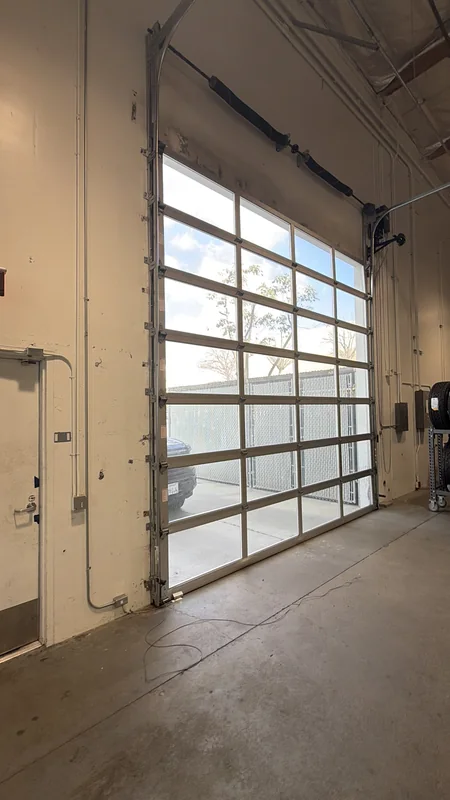
What does a squeal or squeak mean?
A thin, high sound that tracks with the door's movement is almost always metal rubbing on metal. Hinge pivots dry out, and the small bearings inside steel rollers lose their grease. Cold makes it worse because what lubricant is left gets thick.
Your opener or door manual will say what lubricant it wants. Genie, for instance, recommends lubricant made for garage doors on rollers, hinges and other moving points. If a squeal survives a proper treatment, the part itself is probably worn.
What does grinding usually point to?
Grinding is rougher and lower. If it comes from the door, a roller with a failed bearing is dragging instead of turning, or a roller is rubbing against a bent section of track. If it comes from the opener housing on the ceiling, the drive parts inside may be wearing.
Stand to the side and watch one full cycle. Note whether the sound follows the door or stays with the motor. That single observation cuts the diagnosis time a lot.
Why does the door pop or crack as it moves?
A sharp pop at the same spot each time usually means something is catching and then releasing. Common culprits are a hinge that has cracked or loosened, a roller that jumps in a kinked track, or a panel flexing because the door is out of balance and the opener is dragging it.
If the pop comes with a visible jerk or shudder, stop using the opener. A door that catches can come off the track, which turns a small fix into an off-track repair.
What about banging or slamming?
Two bangs matter most.
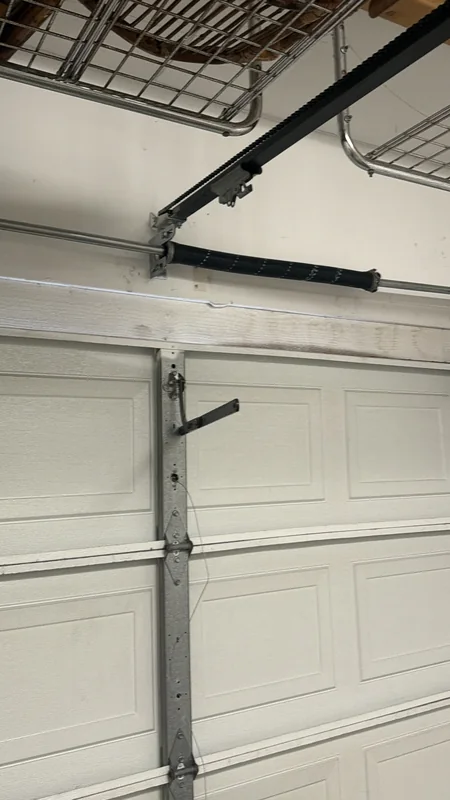
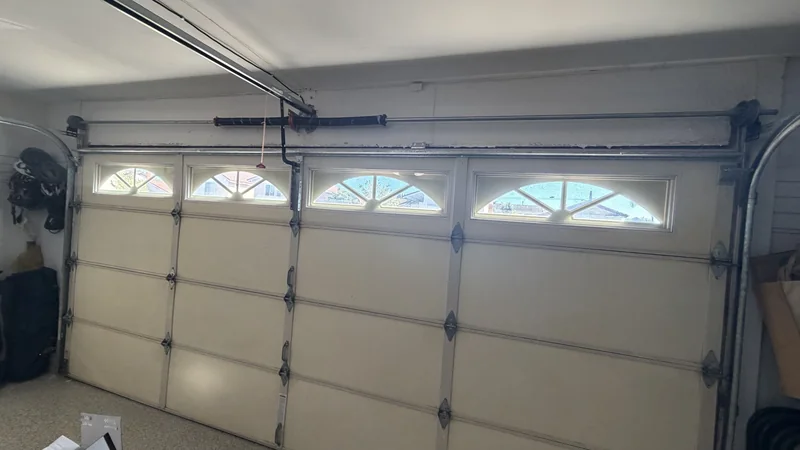
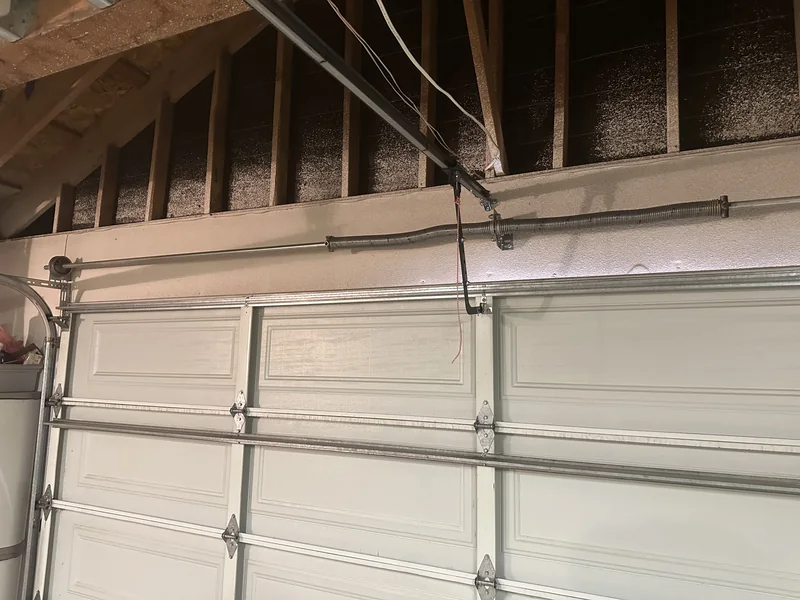
The one-time bang, often when nobody is touching the door. A torsion spring under tension can break with a report loud enough to sound like something fell. Afterward, the opener may hum while the door barely lifts. Do not pull the release and try to lift it; without the spring, the full weight of the door is loose. That is a spring repair, and it is technician work only.
The slam at the end of travel. If the door drops the last few inches hard, it may be out of balance, or the opener's travel setting may be off. A door that falls rather than lowers is a safety concern for anyone underneath.
Why did my door get louder after I lubricated it?
Homeowners ask this a lot. Sometimes the new spray washed grit into a bearing, or went onto a part that should have stayed dry, such as a belt or nylon piece. Sometimes the noise was always a failing part, and the lubricant simply stopped masking it. Either way, repeated spraying rarely helps. A new sound after maintenance deserves a look, not another coat.
Does cold weather make a garage door louder?
It often does. Grease thickens, rubber stiffens, and metal parts shrink slightly, so rollers and hinges that were quiet in September can complain in January. A cold-only noise that disappears in spring still points to wear worth fixing, because the same part is working harder on every freezing morning.
How do you describe the noise so it helps?
- Take a short video from a safe spot on the ground, with the sound on, through a full open and close.
- Note where in the travel it happens: starting, midway, near the top or at the floor.
- Note when it started and whether cold makes it worse.
- Write down the opener brand and model from the label on the motor housing.
Hearing something new? What to do next
Call (330) 947-4591, any hour, and describe the sound using the notes above, or send the details through the request form. If you heard a single loud bang and the door now feels stuck, keep it closed and keep the car inside until someone has looked at the springs. Opener noises fall under our opener repair work.