Once a month, run the auto-reverse test, check the photo eyes, look over the door for loose or broken parts, and make sure remotes and the wall button are out of children's reach. The U.S. Consumer Product Safety Commission recommends inspecting the door and opener every 30 days and testing the reverse function with a 2x4 on the floor. If anything fails, stop using the opener to close the door until it is fixed.
Why check every month?
Safety systems fail quietly. A door that opens and closes every day can look perfectly normal while its reversing feature no longer works, and the CPSC warns that children have been trapped and killed under automatic doors that failed to reverse. A monthly check is how you catch a problem before a person does.
The checklist at a glance
| Check | Passes when | If it fails |
|---|---|---|
| Contact reversal (2x4) | Door reverses after touching the board | Stop closing it with the opener; call |
| Photo eyes | Door won't close with the beam blocked | Clean and check alignment; call if still failing |
| Wall button and remotes | Out of children's reach | Move the button higher; store remotes |
| Visual walk-around | No gaps, frays, loose parts or crooked sections | Leave it closed; call |
How do you run the auto-reverse test?
Put a 2x4 on its wide side across the center of the doorway, then close the door with the opener. The CPSC says that if the door does not properly reverse when it strikes the board, the opener should be disengaged until it is adjusted according to the owner's manual, repaired or replaced. Genie's guidance adds a time limit: the door should reverse within two seconds of contact.
Keep your hand near the wall button during the test and stand clear of the door's path. Remove the board before the next normal close.
How do you check the photo eyes?
The two small sensors near the floor on each side of the opening send an invisible beam across the doorway. The CPSC says they should sit 4 to 6 inches above the floor.
To test them, set a cardboard box taller than the sensors in the doorway and press close. LiftMaster describes the same check with an object over 6 inches tall: the door should not close.
If it fails, clean each lens using a dry, soft cloth, as Genie recommends, and look at the indicator lights for alignment. In winter, check for snow pushed against a sensor by the shovel or salt film on the lens. Never tape, bend or bypass a sensor to make a door close.
Where should remotes and the wall button be?
The CPSC recommends mounting the wall button as high as practical and keeping remotes away from children. Genie gets specific: at least five feet up and within sight of the door.
- Clip car remotes to the visor, not the cup holder or back seat.
- Keep spare remotes in a drawer, not in a toy bin or on a low hook.
- Change the keypad code if older kids have shared it with friends.
What house rules should kids know?
- Never run under a closing door or try to beat it.
- No hanging on the door, sitting on the bottom edge or playing in the doorway.
- Only adults press the button, and only while watching the door until it stops.
Genie's own safety list says to keep people clear of the opening while the door is moving. The CPSC also asks parents to talk with children about the hazard.
What should you look at on the door itself?
With the door closed and the opener stopped, look without touching:
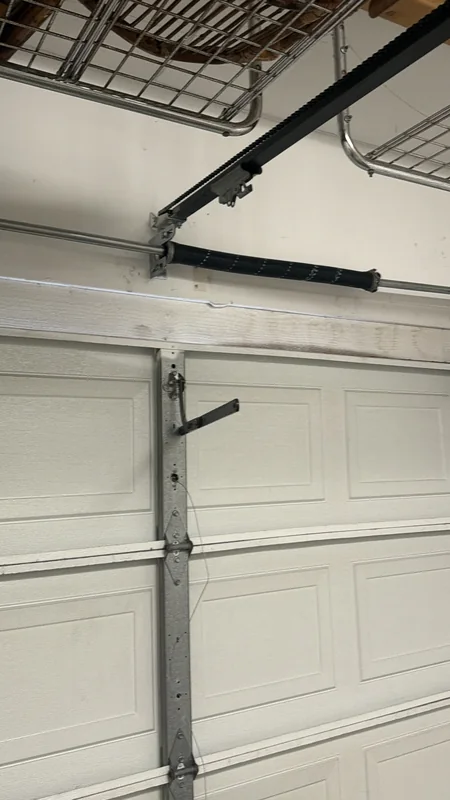
- Springs over the door or along the tracks: any gap in the coils.
- Lift cables at the bottom corners: frayed strands, slack or rust.
- Rollers and hinges: cracks, wobble or missing fasteners.
- Door sections: one side sitting lower than the other.
The CPSC describes a properly working door as balanced, meaning it stays in place when stopped partway, and says an unbalanced or binding door should be serviced by a professional. Springs and cables stay off-limits for homeowners. Our maintenance tune-up covers those parts.
Something failed? What to do next
Stop closing the door with the opener, keep the kids away from it, and call (330) 947-4591, day or night. Tell us which check failed and what the door did. If your opener has no photo eyes at all, mention that too, and have the opener brand and model handy. You can also send the details through the request form.