Leave the door exactly where it stopped
This is the one garage door problem where doing nothing is the right move. A door that has left its track is hanging on fewer rollers than it was built for, and the springs may be pulling unevenly. A shove from below, or one more press of the remote, can bring a section down.
- Unplug the opener, or switch off its breaker.
- Don't pull the emergency release. With the door partly open, the opener arm may be what is keeping it up.
- Don't hammer or pry rollers back into place.
- Nobody stands under the door, and nobody walks through the doorway, inside or out.
- If the car is outside, leave it outside. If it is inside, leave it there for now.
How a roller ends up outside the track
Each door section has a roller at both ends, riding in a steel channel. The channel is shallow by design, so it doesn't take much for a roller to climb out:
- A vertical track pushed out of line by a side mirror, a lawn tractor or a bike
- A roller with a cracked wheel or a seized bearing that drags and climbs
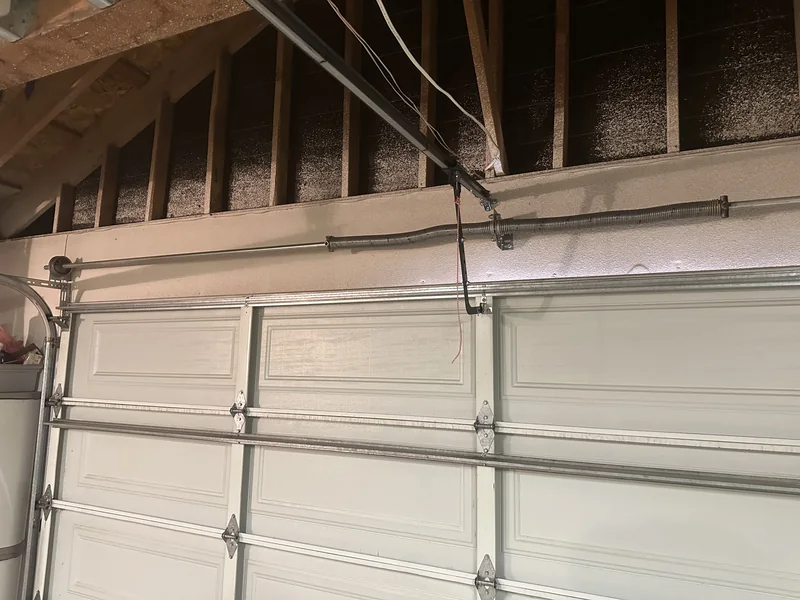
- A cable or spring failure that tips the door so one side pulls away
- Track brackets that have worked loose on the wall or at the floor
- An opener that kept pushing after the door hit something
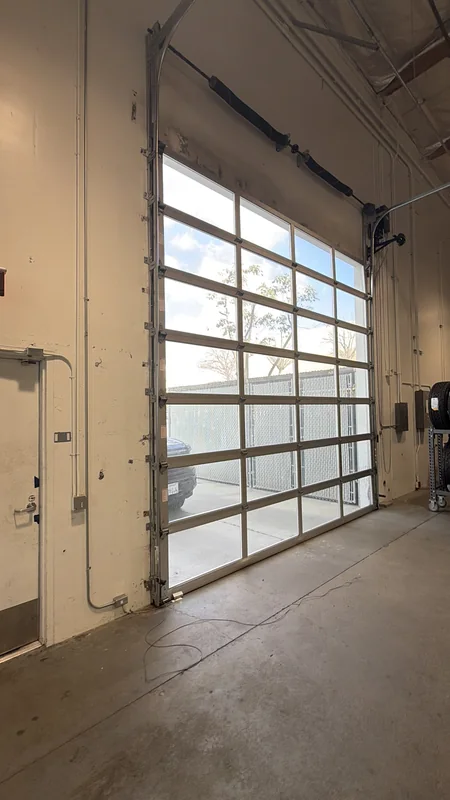
Where it came off tells us why
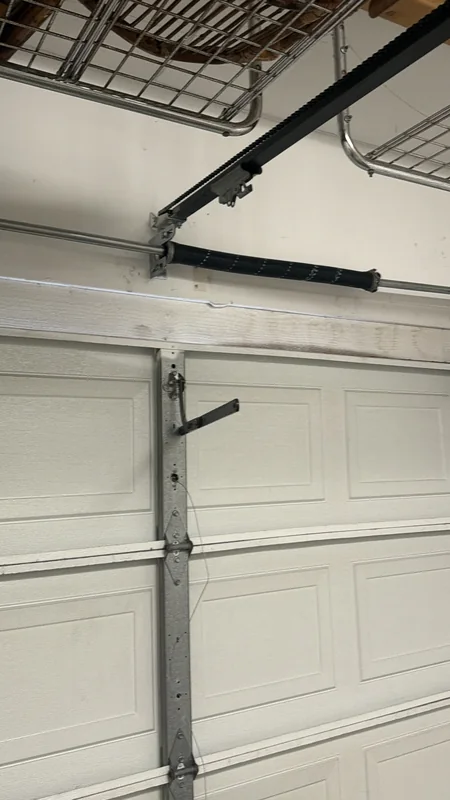
Rollers out near the floor often point to a bent lower track or a loose floor bracket. Rollers out at the curve near the ceiling usually mean the door twisted, often because of a cable or spring. If only one side came out, that side is where the trouble started. Describe what you see when you call, even roughly, and we can plan the visit around it.
The slow, winter version of this problem
Freeze-thaw causes a gradual kind of off-track door. Meltwater seeps under the bottom of the vertical tracks, freezes, and shifts the floor brackets a little at a time. In March alone, the Akron-Canton Airport station averages about 20 nights at or below freezing, while the average afternoon high climbs to around 48°F (NOAA monthly normals). That means ice forming and melting at the threshold over and over through early spring.
Over a few winters, the lower track leans out of plumb, the gap between roller and track wall grows, and one day a roller slips out. Salt corrosion on those same lower brackets speeds it along.
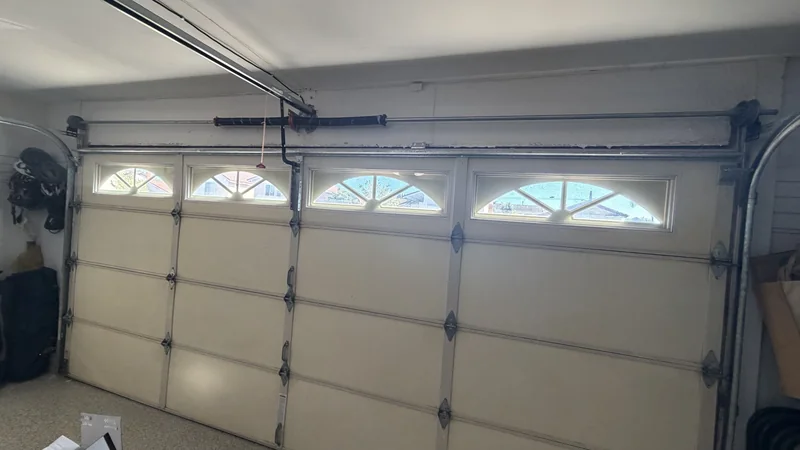
Putting it right
We clamp the door so it can't move, and if a cable or spring is involved, the spring tension comes off before anything else. Then we find the cause. A roller that climbed out of a bent track needs that track straightened or replaced. One that came out because a cable failed needs the cable repaired first.
With the cause handled, we reseat the rollers, square up the tracks, re-anchor loose brackets and check every hinge, because a twisted door often cracks them. Worn rollers get replaced. The door is rebalanced and run through several cycles on the opener, including the reverse test.
If a section creased when the door twisted, we will point it out and talk about replacing that section.
Keeping it from happening again
Most repeat cases start with the vertical tracks near the floor. A few habits protect them:
- When shoveling the driveway, don't pile snow against the door or the bottom of the tracks. Packed snow freezes into a block that the door and rollers push against.
- Give lawn tractors, bikes and bins a spot away from the tracks.
- Pull in straight and far enough that the mirrors and bumper clear the track on both sides.
- Listen for a new scrape or clunk at one spot in the door's travel. It often means a track beginning to bow or a bracket that has loosened.
Your next move
Call (330) 947-4591. Someone answers 24/7. Let us know which side came out, roughly how high the door is sitting, and whether you can see a loose cable or a gap in a spring. Photos taken from a safe distance help a lot.