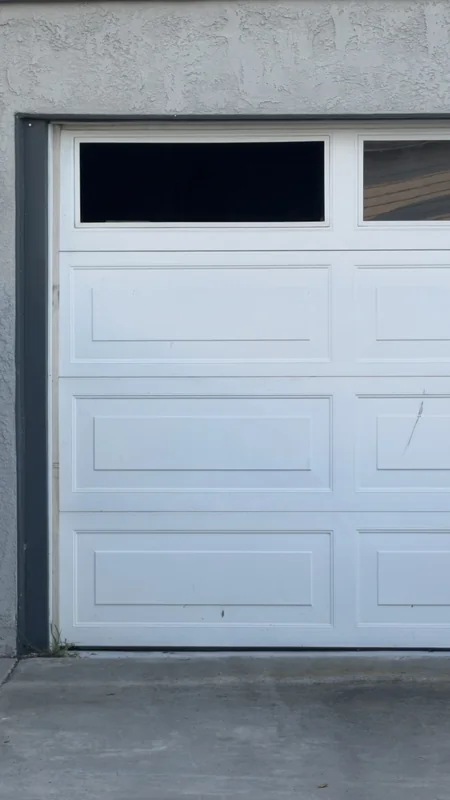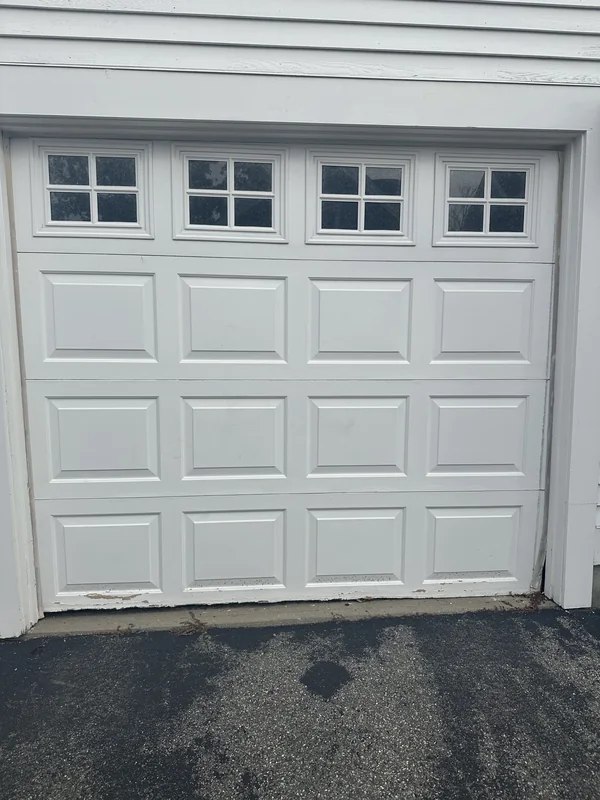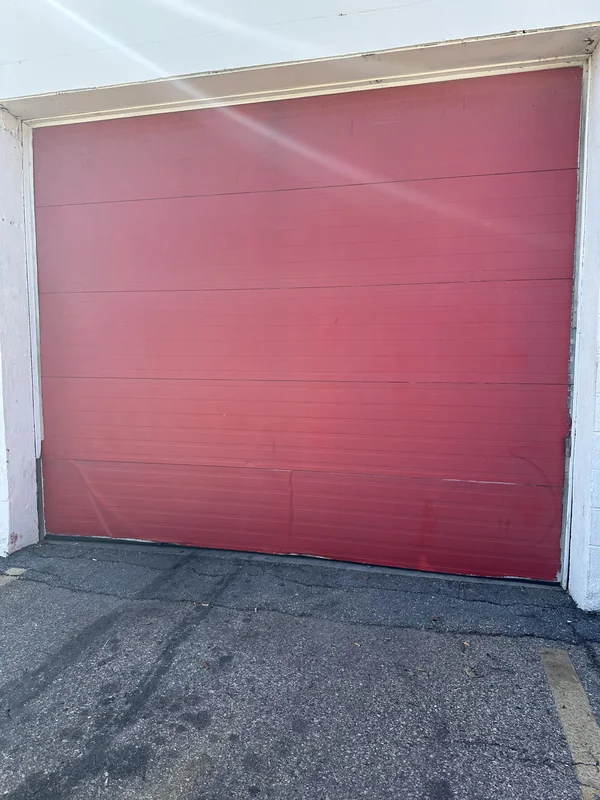
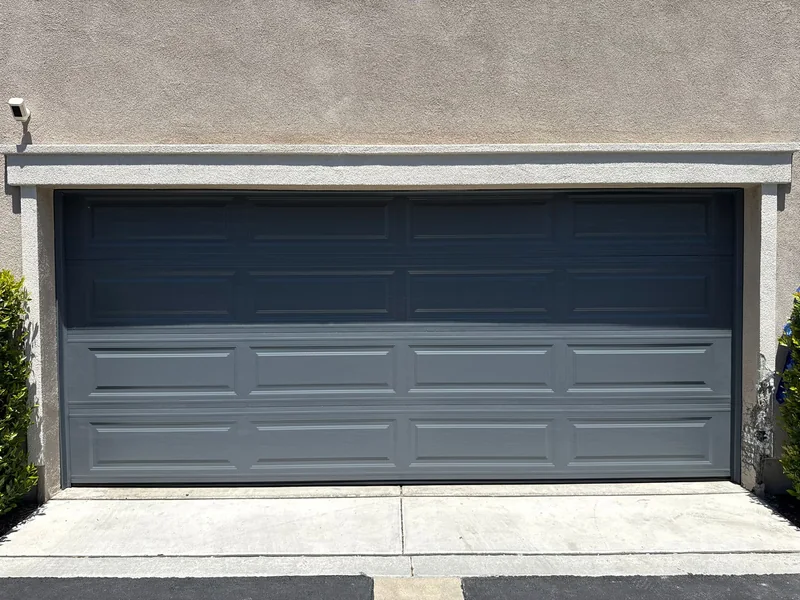
A dent is usually cosmetic when the door still travels straight, runs quietly and closes evenly, and the hinges, rollers and any steel strut on that section look unchanged. It becomes a repair question once the section has changed shape: a crease across the panel, a crack at a joint, a hinge pulled loose, a roller tipped out of the track, or a bent strut. A section like that can bind as it rolls around the curve, so stop using the opener. Whether one section can be swapped depends mostly on whether the maker still produces your model and finish.
Around Fairlawn, the lower sections take most of the hits: a bumper sliding on a slushy apron, a snow blower chute, a hockey puck or a basketball, a slab of ice sliding off the roof edge, and the odd summer hailstorm.
Is the damage cosmetic or structural?
Clopay's advice on dented doors separates shallow dents, which often can be repaired, from large or deep ones that may weaken the panel. It also singles out damage near edges and seams, since that can change how the door opens, closes and seals.
What you can check safely, with the door closed and nobody pressing the button:
- Sight along the door from one end. A healthy door looks flat. A section that bows in or out, or a joint that no longer lines up with its neighbors, is more than a dent.
- Look at the inside face. Check the hinges and fasteners on the damaged section for tearing or pulled screws, and look for a horizontal brace that is kinked.
- Look at the rollers. Each one should sit square in its track. A roller tilted sideways near the impact is a warning sign.
- Look for cracks. A split along a seam or at a hinge is structural even when the dent itself is small.
- Watch one open cycle from the side, only if everything above looks normal. Listen for scraping or popping and stop if the door hesitates or shifts sideways.
Do not try to pound a section flat while it is on the door, and never loosen the brackets at the bottom corners. They hold the lift cables under spring tension.
Why can one bent section jam the whole door?
A sectional door is a row of panels hinged together. As it opens, each joint has to fold as it rounds the curved track, and each roller has to stay in line. A bowed section pushes its rollers off that line, so it can wedge in the curve while the opener keeps pulling. That is how a small dent turns into a door hanging out of its track, which is an off-track repair and a safety problem. A bent strut matters for the same reason: it is there to keep a wide section from sagging as it travels overhead.
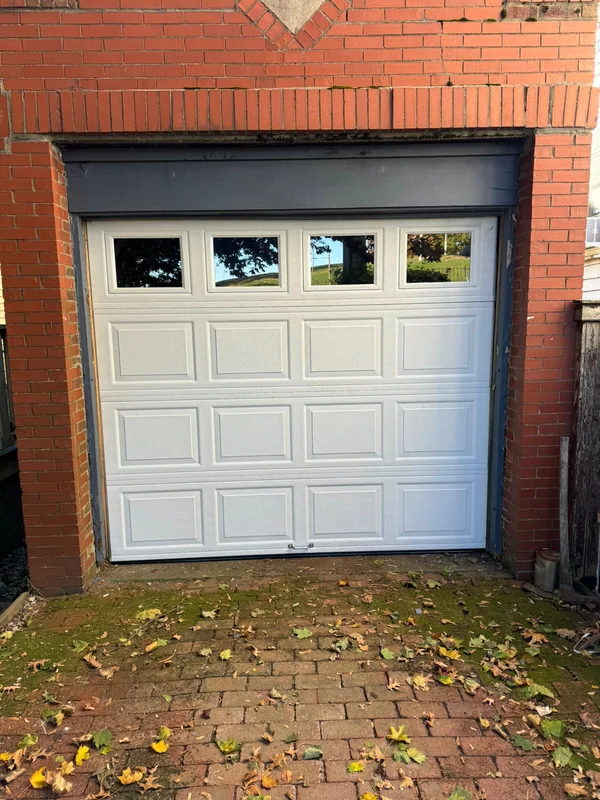
Repair, one new section or a whole new door?
| What you have | Usually points to |
|---|---|
| Shallow dent, door runs normally | Live with it, or a cosmetic fix |
| One creased or cracked section, model still made | Replacing that section |
| Older or discontinued door, several damaged sections, or other problems too | A new door |
Clopay says replacement sections for its steel and wood doors come through its dealers as long as it still manufactures your model, and that a door made in roughly the last ten years can be identified from the serial number on the inside of the bottom section. Its dent guide adds that sections are easier to find for newer models, while older or discontinued doors can be a challenge. Color is the other catch. Clopay notes that years of weather can shift a door's color, so even a factory section may not match exactly.
If a section is available, ask about panel replacement. If not, or the door is tired in other ways, new door installation is the other route, and the guide to choosing a door for Northeast Ohio helps with that decision.
Does it matter whether the door is insulated?
Yes, in two ways. First, a replacement section has to match what is already there: the same thickness, the same inside face and roughly the same weight. Dropping a heavier insulated section into a lighter door changes its balance, and Genie's guidance says a door that has been upgraded needs springs matched to it, set by a professional.
Second, if you are replacing the whole door anyway, construction affects how it handles the next impact. Clopay notes that foam glued in between two steel skins makes a panel more rigid. For a driveway where the lower panels keep getting hit, that is worth weighing.
What photos should you take before calling?
- The whole door from the driveway, straight on.
- A close shot of the damage with a hand or a tape measure in the frame for scale.
- The inside face of that section, showing hinges, rollers and any strut.
- The label or serial number on the inside of the bottom section, if you can read it.
- Both tracks near the damaged section.
If a storm or a vehicle caused the damage, keep the same photos for your records. What is covered is something your insurer decides.
When should you stop using the door and call?
- The door binds, pops, hesitates or drifts sideways as it moves.
- A roller has left the track, or the door hangs lower on one side.
- A hinge, strut or bracket on the damaged section is bent or pulled loose.
- A crack runs along a seam or through a hinge mount.
- The door stopped partway. Leave it there, keep people clear and unplug the opener.
Call (330) 947-4591, answered at any hour, or send the photos with the request form, and include the door's width and roughly how old it is.