If the opener motor hums or runs while the door stays where it is, either the door has become far too heavy for the opener, it is held in place, or a link between the motor and the door has let go. The usual causes are a broken spring, a trolley still unhooked from an earlier outage, a stripped gear or worn sprocket inside the opener, a chain or belt that has slipped off, or a bottom seal frozen to the floor. Stop pressing the button, look from a few steps back, and leave springs and cables to a technician.
What is going on when the motor runs but the door sits still?
Think of the opener as a relay. The motor spins a gear, the gear drives a chain, belt or screw running the length of the rail, that drive tows a trolley, and the trolley pulls a bent arm fastened to the top section. The springs carry most of the weight; the opener mainly steers. When one handoff in that relay slips, or the door suddenly weighs more than the springs are holding up, you get noise without movement.
The length of the sound is a useful hint. Chamberlain's support article on chain and belt openers links a brief hum to a broken spring or a locked door, and a hum lasting around 30 seconds to a door that is disconnected from the opener.
How can you tell which part gave out without touching it?
| What you see from the floor | Likely cause | Your move |
|---|---|---|
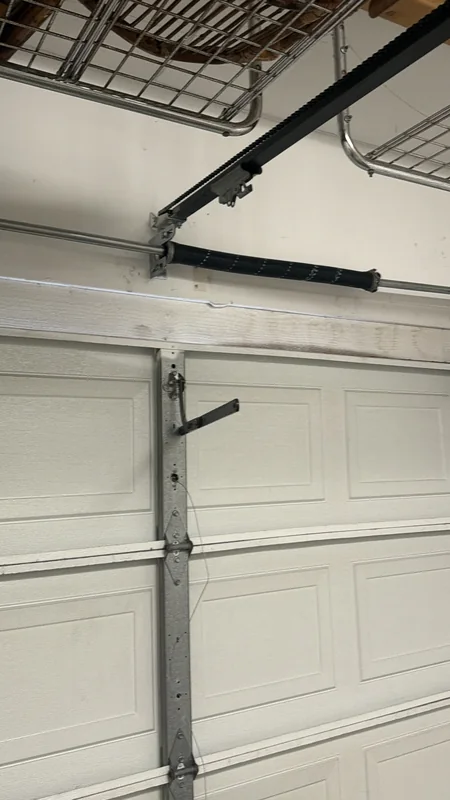
| A gap in a coiled spring over the door, maybe after a loud bang | Broken spring | Leave the door closed and call |
| The trolley travels along the rail, the door stays put | Trolley released from the door | Reconnect only per your manual, and only if the springs look whole |
| Chain or belt sagging onto the door or hanging off the rail | Drive slipped off its sprocket | Unplug the opener and call |
| Motor noise, nothing on the rail moves, maybe a grind | Worn drive gear or sprocket inside the opener | Stop using it and call |
| A short hum on an icy morning, seal stuck along the slab | Door frozen down | See the frozen door guide |
Chamberlain's troubleshooting pages use the same idea: run the opener and watch the trolley on the rail, because if it makes its full trip, the trouble is likely with the door rather than the opener.
Safe checks for a homeowner:
- Press once, then watch. From beside the door, not under it, see whether the trolley moves.
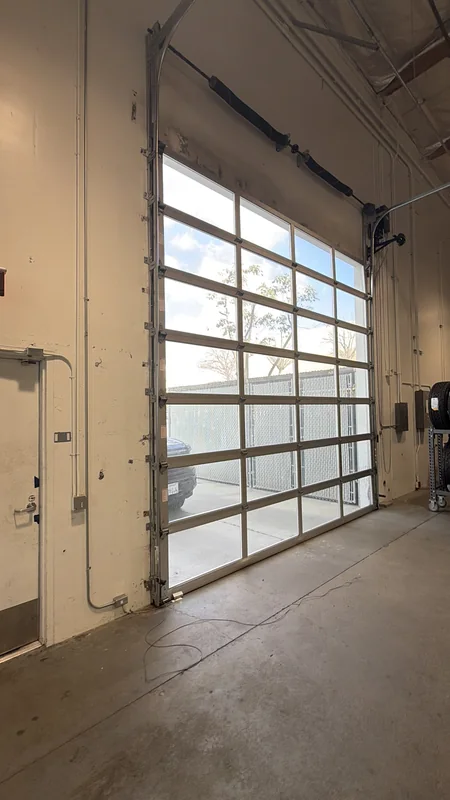
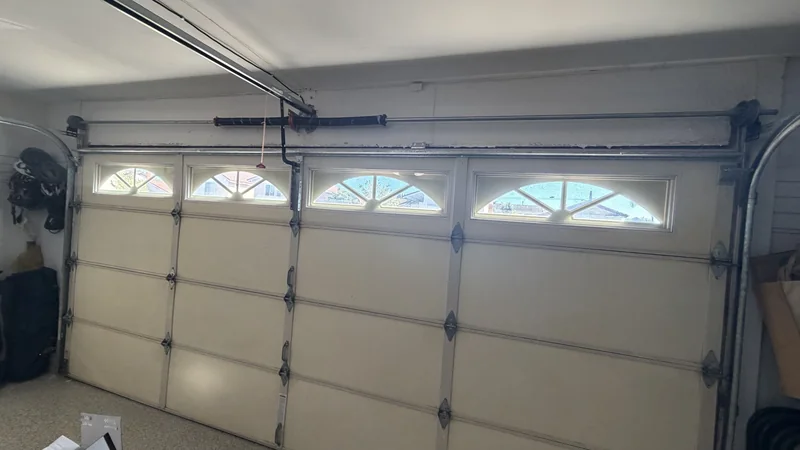
- Look at the springs and cables. Scan for a split coil, a loose or frayed cable, or one side of the door sitting lower. Look only.
- Check the manual lock. Some doors have a slide bolt or a T-handle lock. Chamberlain lists an engaged door lock as one reason for a brief hum. If it is thrown, slide it open and try once.
- Find the red cord. Notice whether the release has been pulled and the trolley sits apart from the door arm.
- Unplug the opener if the chain is hanging or the housing grinds, so nobody else in the house keeps pressing the remote.
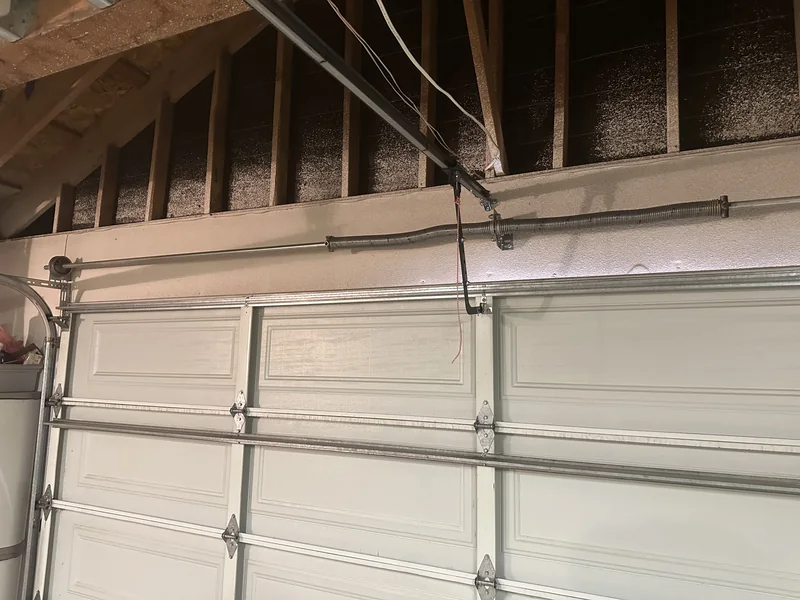
Could a broken spring be behind it?
Very often, yes. The springs offset nearly all of the door's weight, and an opener is built to guide a balanced door, not to hoist a dead one. With a spring gone, many openers strain for a moment and give up, or lift an inch and reverse.
Genie's safety guidance is direct: do not run the door by hand or with the opener if it has a broken spring. That also means leaving the red cord alone. Once the trolley is released, nothing but your arms is holding a door the spring no longer supports. A broken spring is a spring repair job, full stop.
What if the trolley came unhooked after an outage?
Someone pulled the release during a storm to get a car out, the lights came back, and nobody reconnected it. The motor runs, the chain or belt carries the trolley along, and the door ignores it.
Reconnect it only when the door is fully closed, the springs show no gap, the cables look tight, and the door lifted and lowered smoothly by hand the last time it was used. On many Chamberlain models, drawing the cord toward the motor resets the release arm, and the trolley latches back onto the door during the next complete cycle. Other brands differ, so follow your manual. The same Chamberlain article warns never to use the release handle to raise or lower the door. The power outage guide covers the release itself.
What about a stripped gear or a chain that came off?
Gears inside the opener wear a little on every trip. Once their teeth are worn smooth, the motor spins and the rail stays still, often with a whirring or grinding sound from the housing. A worn sprocket on top of the motor, or a chain left too slack, lets the chain jump off entirely. Screw drives have their own version: Chamberlain names a stripped rack inside the rail as a cause when the hum runs past about five seconds.
Worn drive parts can also be a symptom: a door that binds, rubs or sits out of balance makes the opener fight on every cycle, so a technician should check the door as well as the motor. Drive and gear work falls under opener repair. If a hard freeze is the likely culprit instead, the frozen door guide walks through it. A door that starts and then stops partway or reverses is a different fault, usually sensors or travel settings.
When should you stop and call?
- You see a gap in a spring, or you heard a bang before the trouble started.
- A cable is loose, frayed or off its drum, or the door hangs crooked.
- With the door released, it feels very heavy, sticks or drops. Chamberlain says a door like that needs service before any opener troubleshooting.
- The door was open when it stopped. Keep everyone out from under it and leave the cord alone.
- The chain or belt is off, the housing grinds, or you smell something hot.
- The trolley will not relatch after a full cycle.
Call (330) 947-4591; the line is answered 24/7. Tell us how long the hum lasted, whether the trolley moved, and the opener brand and model printed on its motor housing. Photos of the springs and the rail, taken from the floor, help too.